Charlton boss reveals what's impressed him most about Portsmouth this season and confirms huge injury blow ahead of Valley clash
and live on Freeview channel 276
The Charlton boss believes his opposite number did ‘really well’ during the last transfer window and has assembled a ‘competitive’ Pompey squad that is already showing its League One mettle.
And he pinpointed the sale of Marcus Harness and Cowley’s work in the loan market as pivotal manoeuvres in the Blues’ business during the close season.
In total, Pompey brought in 12 new faces in the summer.
Advertisement
Hide AdAdvertisement
Hide AdPart of that was funded by the departure of Harness to Ipswich for an undisclosed fee believed to be in the region of £750,000.
Meanwhile, the extra financial boost will have helped the Blues lure the likes of Josh Koroma, Dane Scarlett, Owen Dale, Josh Griffiths and Joe Pigott on loan.
Those deals have allowed Cowley & Co to go into Monday night’s game at Charlton sitting fourth in the table and with three games in hand on those teams currently above them – Plymouth, Ipswich and Sheffield Wednesday.
Garner – who has been dealt a huge injury blow on the even of the game with news that top scorer Miles Leaburn has suffered ankle ligament damage – believes he can still expose perceived weaknesses in Pompey’s squad at the Valley.
Advertisement
Hide AdAdvertisement
Hide Ad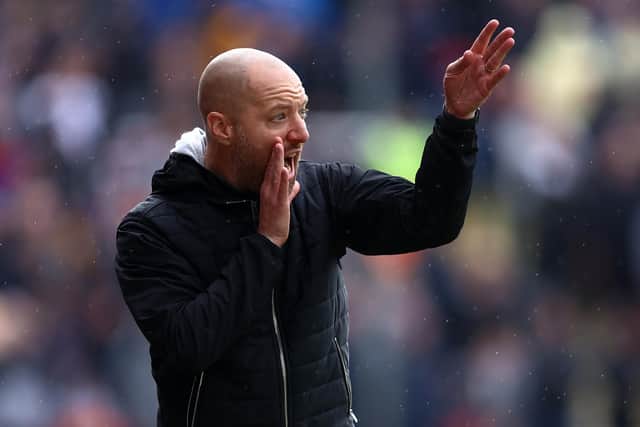

Yet he admitted that will be harder given the strength of Cowley’s pool of talent.
The Charlton boss told londonnewsonline.co.uk: ‘They (Pompey) have had a fantastic start and they recruited really well in the summer.
‘They lost Marcus Harness, which they generated a good transfer fee for and re-invested some of that into their squad. They have used the loan market exceptionally well.
‘They have got a really competitive League One squad and that has shown at the start of the season.
Advertisement
Hide AdAdvertisement
Hide Ad‘We are aware of what a good side they are and what challenges they will pose us but, as always at home, we’ll be looking to expose them and win the game.’
Charlton will have Chuks Aneke to call upon for the visit of the Blues, after the striker featured for the first time this season against Exeter in midweek following a lengthy calf injury.
But the loss of Leaburn will no doubt negate that positive, with the 18-year-old on the mark five times this season and outshining Jayden Stockley (2) on the goal front this season.
Garner added: ‘It’s not good news, unfortunately.
‘He’s got some ligament damage to his ankle. He’ll see the specialist next week. But he’s in a protective boot at the moment. He’s certainly going to be out for a period of time.
Advertisement
Hide AdAdvertisement
Hide Ad‘Disappointing for us but also disappointing for Miles, after what a great season he has had so far.
‘I had a really good chat with him on Friday and we’ve put a little plan together of how he comes back from this period in a better place. He’s still learning and there are still things we can with him during this period of time.
‘These are some of the challenges you face in professional football.’