
How to Get Filthy Rich review: Sixth-form level of debate lets down this call to level the playing field
The first thing I suppose we should mention about How to Get Filthy Rich with Gary Stevenson (Channel 4, Weds, 9pm) is that the title was only half right.
While Gary Stevenson was certainly present and correct, front and centre, it certainly did not advise you on how to get filthy rich.
In fact, Gary's sole aim was to stop the already filthy rich get even more filthily rich.
Former banker Gary has walked away from his high-powered city job, which made him a millionaire by the age of 25, and now spends his time on a YouTube channel, in print and as a talking head highlighting wealth inequality.


His treatise is that the rich – by which he means the super-rich – are getting richer, taking and hoarding wealth from the rest of us. And as they get wealthier, the rest of us get poorer, Government resources become more stretched, we cease to own anything.
To Gary, solving this is simple – a wealth tax. An annual tax of two per cent on all wealth over £10 million. That means anyone worth £11m would pay £20,000 a year. Anyone with a wealth over £1 billion would pay £20m a year.
“Some suggest”, says Gary, that this would raise £24bn a year for the exchequer.
His ideas certainly chime with the cost of living crisis, and anyone could tell you that today's millennials and Gen Z are finding it more difficult than the generations before to get on the housing ladder, to find a stable job, to afford childcare.
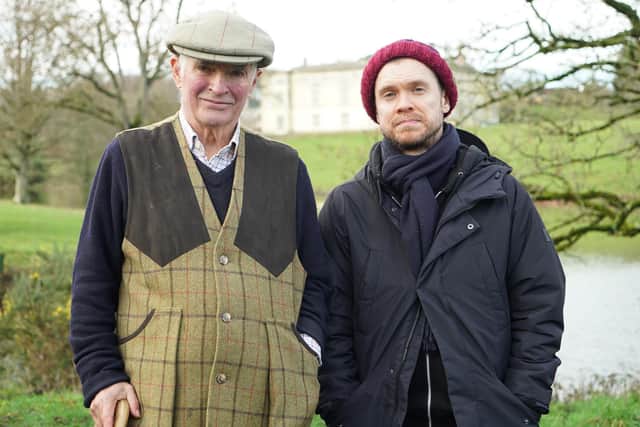
And you'd have to be a particular sort of cynic not to empathise with the struggles of some of the people Gary meets, as he takes the inevitable journey round Britain – the couple both working who find it difficult to make ends meet, the former healthcare professional now living in a van in Bristol.
But his argument rarely rises above the level of sixth form debate, especially given his exemplars of the filthy rich are presumably the worst people the researchers could dig up.
Francis Fulford, for example, the posho aristocrat who has earned a reasonable living over the years, popping up on various TV shows being foul-mouthed in an accent which forces you to believe he has a whole punnet of plums in his upper-crust gob.
These TV shows include his own Channel 4 reality series The F***ing Fulfords, as well as popping up being objectionable in, ahem, Channel 4's high-concept “social experiment” Handcuffed: Last Pair Standing – you just wonder what his name appears under in the Channel 4 Rolodex.
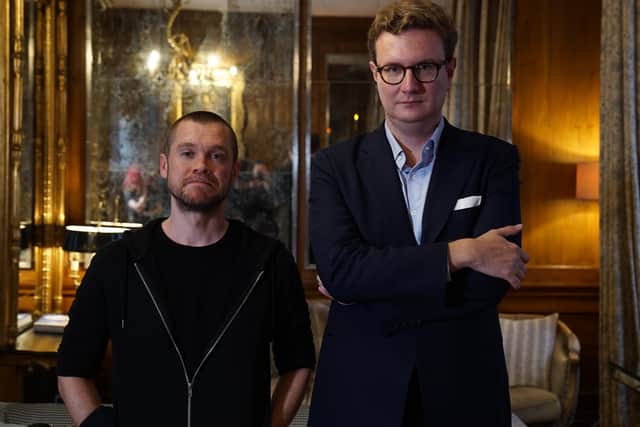
In many of these appearances, he makes it clear that, while he owns a huge tract of Devon countryside and a large mansion, he is “asset-rich but cash-poor”.
And he asks Gary how people like him like arable farmers who own their own land, might pay this annual £50,000 or £100,000 or £200,000 a year tax if the only way to release that wealth is to sell the land they own.
An argument he sets out again when Gary meets him on the estate. In short, it's nothing we haven't seen before, and it's something Gary would surely have expected, yet he seems struck mute by the old toff.
The only enjoinder he can muster is to wonder if we all couldn't buy some of that land, perhaps seeing a future where we're all Tom and Barbara Good.
Then there's the tax advisor Andrew Henderson, who somehow out-awfuls Fulford with his bullish statements that “life isn't fair” and that tax should be abolished.
Again, Gary does not rebut Henderson's blithe assumptions that everyone will be all right if we just buy what we need when we need it.
We only see his arguments against a position afterwards, when he talks directly to the camera, away from the possibility of a counter-punch.
And when he meets economist Dan Neidle, who calls a wealth tax “absolute populist claptrap”, and suggests other options, such as council tax reform, capital gains tax hikes and a land tax, Gary's central argument just boils down to: “Yeah, but a wealth tax though...”
For a proposition that might find a receptive audience, the whole thing is off-puttingly adolescent, an impression only reinforced by the stunt at the end where Gary drives around London in a van with a video display on the side playing distressing messages from people struggling to get by.
Which is all very well, but comes across as Gary having a strop because the Government refused to appear on his show.
This is an argument that could – and should – be made, but this isn't the way to make it.