
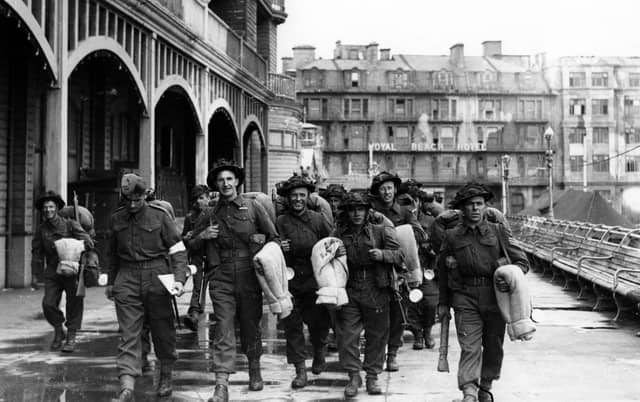

Being the home of the Royal Navy, and a relatively short distance from London, the city found itself right in the centre of the efforts to turn the tide in favour of the Allied Forces. In particular the area played a key role in the Normandy Landings with staff working diligently in a network of tunnels underneath Fort Southwick on Portsdown Hill which was the Underground Headquarters for Operation Overlord – the codename for the military operation. This provided a bombproof, comprehensive Naval, Army and Air Force Operation Control and Communication Centre where reports from radar stations were crossed-referenced with messages from shipping to provide an accurate picture of what was happening in the English Channel.
This information was then plotted on a large table map at the Fort, and was passed to the Allied commanders nearby at Southwick House to which it was connected by a series of underground tunnels. On D-Day itself on June 6 1944 there were 700 staff working underground.
Ahead of D-Day, troops were also camped nearby in areas just outside of the city including in Creech Wood in Denmead and in Stokes Bay in Gosport where they trained and prepared for the operation which turned the tide of the war. On the seafront the area was also transformed with temporary piers and landing platforms constructed – and a huge quality of ships and craft in the Solent. Local people often said it looked like you could walk to the Isle of Wight by going from ship to ship.
However Portsmouth’s role also saw it become a target for the Nazis with the city officially suffering 67 air raids between July 1940 and May 1944, three of these being categorised as major attacks which took place on August 24 1940 during the Portsmouth Blitz, January 10 1941 and March 10 1941. The most devastating of these was on the night of January 10 and 11 1941 which killed more than 170 people, and severely damaged landmarks large areas of the city including Portsea, Landport, and Southsea.
As a consequence much of the city was rebuilt after the war and a large number of children were evacuated for safety to the countryside. However Portsmouth remains incredibly proud of the city’s contribution to the war effort – and its role in the Normandy Landings.
Many thanks to The D-Day Story for supplying and assisting with the captioning of many of these images.
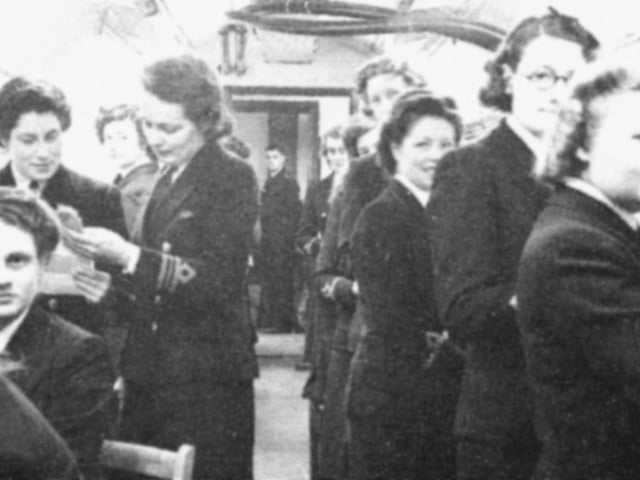
13. Portsmouth during the second world war: Fort Southwick
Wrens of the communications branch at Fort Southwick where much of the planning took place for the Normandy Landings Photo: -
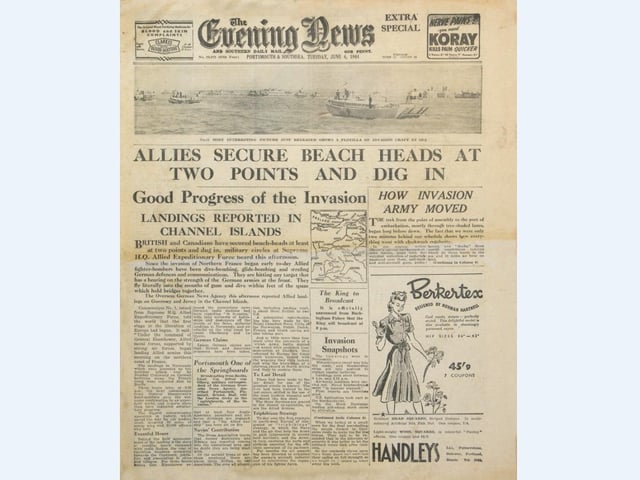
14. Portsmouth during the second world war - breaking the news of D-Day
The News, Portsmouth - then known as the Evening News - reporting the beginnings of the Normandy Landings in a special evening edition of June 6 1944 Photo: The News
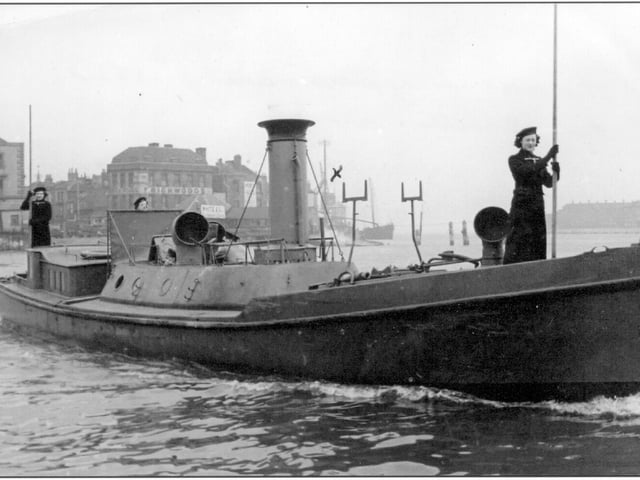
15. Portsmouth during the second world war
HMS Vernon steam picket boat, crewed by Wrens, near the entrance to Portsmouth Harbour. Point, Old Portsmouth, is visible in the background. One of a group of five photographs of Wrens (members of the Women's Royal Naval Service or WRNS) serving in Portsmouth taken a few weeks before D-Day. Wrens did not go to sea in WW2 but they played many supporting roles, mostly on land but some in boats like this. Photo: -
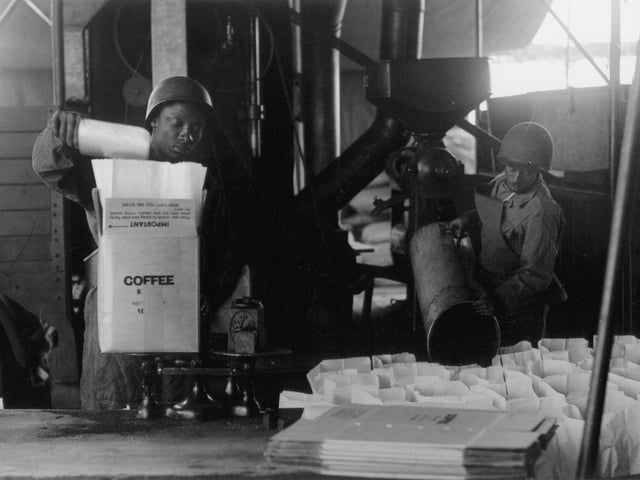
16. Portsmouth during the second world war: D-Day - preparations
US soldiers preparing coffee, probably either at Hilsea or Cosham. The US Army was segregated, so African-American troops were in their own units rather than being mixed amongst white troops, and most were in logistical/support roles like this. Photo: The News