
Aria Thorpe: Dad reveals heartbreak after teenager found not guilty of murder and manslaughter following nine-year-old's death

A heartbroken dad has revealed his anguish after a teenager was cleared of the murder and manslaughter of his young daughter - meaning nobody will be punished for her death
A grieving father says that it was like losing his beloved daughter all over again after sitting through her murder trial.
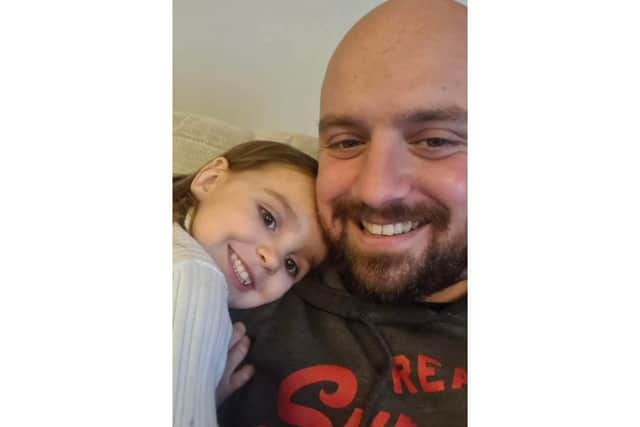
Aria Thorpe, whose dad Tom lives in Waterlooville, died from a knife wound.
A 16-year-old boy stood trial for murder and manslaughter and was cleared of both charges, meaning that he walked free.

During the trial he gave evidence in which he fully admitted holding the knife which killed the nine-year-old, who was living in Weston-super-Mare.
“Aria stood up and I was waving around the knife,” the boy told the jury. “Then at some point I decided that I was going to try to make her flinch and scare her, to get a reaction. I leaned forward, acted like I was fencing.”
The defendant said Aria had been in front of him at the time.
“She had almost taken a step forward but without taking a step forward because before she could, it happened,” he said. “I don’t know what she was doing.
“The knife went into her. Then I pulled it out. I didn’t know what to do. She put her hand to her chest.”
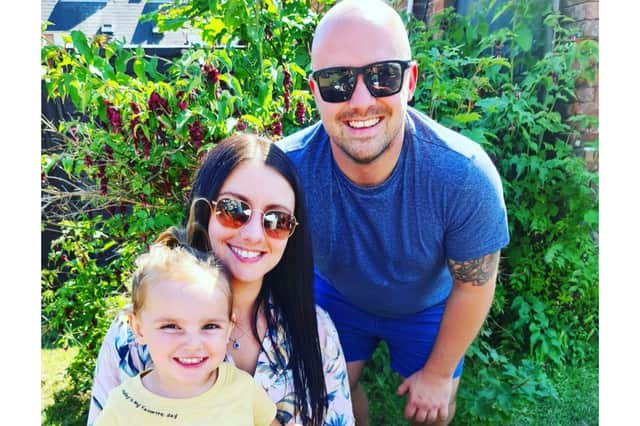
Mr Thorpe said he is heartbroken that nobody will ever be punished for Aria’s death.
Under the law, the case cannot be appealed and officially no crime has been committed.
Mr Thorpe, who lives with his partner Sophie Emmess, said the emotion he felt was that Aria had died for a second time:
“To get not guilty on both - we felt crushed immediately,” he said. “It feels like it’s just happened all over again. Bafflement and sadness again, same emotions. We have lost her again.”
Because the jury returned not guilty verdicts on both the murder and the manslaughter charges, no crime has been committed. And because no crime has been committed, there is - under the law - no victim, and so Mr Thorpe was not able to read a Victim Impact Statement in the case.
In a new tribute to his daughter, Mr Thorpe recalled the joy that Aria would bring to everyone’s life.
“She was always such an outdoorsy person,” he said. “She loved to play games in the woods. We’d go to Alice Holt Forest and the Gruffalo trail. I’d hide behind a tree and get in a bush - she just loved being outdoors.
“It was a very different life when she was here to when she was in Weston-super-Mare. That’s why we have a memorial down here. She was never not doing something to make people laugh.”

In a statement on Facebook, Aria’s aunt Katie Thorpe said: "What does it teach people when a child can lose her life in such a horrific and senseless way, yet nobody is held accountable?
“Aria had her whole life ahead of her. She should be making memories, laughing with her family, growing up and chasing her dreams. Instead, we’ll try to live every day with a pain that will never leave us.
“Our family has effectively been handed a life sentence. We will carry this grief, heartbreak, and loss for the rest of our lives. We will never stop speaking Aria’s name. We will never stop fighting for justice. And we will never stop loving and missing our beautiful girl.”
The legal process
Aria Thorpe’s family are unhappy with the directions that the judge issued to the jury.
The defendant, who by law can’t be named because of his age, was charged with murder and manslaughter.
During the trial, the judge Mrs Justice Finola O'Farrell issued directions to the jury - not telling them what to decide but outlining the parameters they had to work within on the indictments.

The directions explained that they were “alternate” charges, so the defendant - who was identified in court as D - could only be guilty of one of them, not both. He could, however, be cleared of both.
The directions outlined what was accepted by the court - that “It is agreed that D inflicted the stab wound sustained by Aria. It is agreed that the cause of Aria’s death was a single stab wound to the chest. D accepts that he caused the injury which killed Aria and that, as a result of the stab wound inflicted, she died, but his case is that it was an accident and that he only intended to scare her.”
On the murder charge, the jury was told that the prosecution had to prove that “D deliberately (rather than accidentally) stabbed Aria”, and that “at the time he stabbed Aria, D intended to kill her or cause her really serious harm.”
On the manslaughter charge, the judge ruled that the prosecution had to prove that “D deliberately (rather than accidentally) stabbed Aria”, and that “at the time he stabbed Aria, his act was one which any reasonable person would realise was bound to subject Aria to the risk of physical harm, albeit not necessarily serious harm.”
Aria’s family respect the jury’s decision, and agree not guilty was the verdict it had to give under the directions.
They are unhappy that recklessness was not part of the charge.
In general, Crown Prosecution Service guidelines say that manslaughter is “primarily” committed in one of three ways:
- Killing with the intent for murder but where a partial defence applies, namely loss of control, diminished responsibility or killing pursuant to a suicide pact.
- Conduct that was grossly negligent given the risk of death, and did kill ("gross negligence manslaughter"); and
- Conduct taking the form of an unlawful act involving a danger of some harm that resulted in death ("unlawful and dangerous act manslaughter").
A statement from the CPS said: “We understand that this is a heartbreaking case and our thoughts remain with the family of Aria Thorpe.
“Whilst we understand the concern around the judge’s directions to the jury, the verdict is final and there is no legal avenue for the prosecution to seek a re-trial.”