
Donna Jones warns police reform plans would put people at ‘serious risk’ and see crime rise
The reforms would be the biggest to policing in over 200 years
Serious concerns have been raised over Government plans to radically restructure policing in England and Wales with the safety of communities put at “serious risk” with crime increasing.
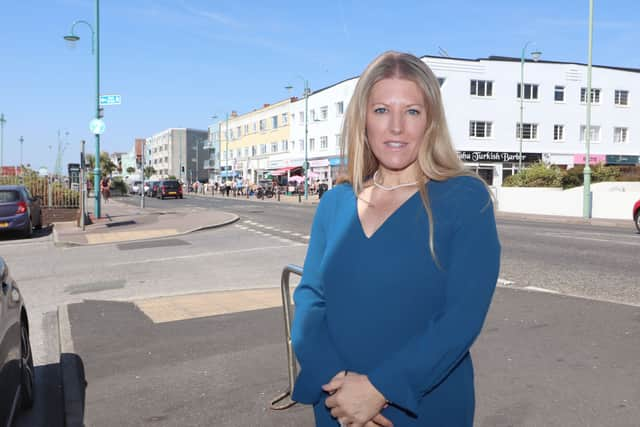
Hampshire’s police and crime commissioner Donna Jones has poured scorn on Home Secretary Shabana Mahmood’s plans to reorganise policing into around 200 local policing commands (LPCs), each roughly the size of a unitary authority and led by a named commander.

The commands would sit beneath a smaller number of regional specialist police services, although the Government has yet to confirm how many there will be. Some reports have suggested the number could be as low as nine, replacing the existing 43 police forces across England and Wales.
The proposals form part of what the Home Office has described as the biggest reforms to policing in 200 years.
Earlier this year, the Government outlined plans to create a national police service, dubbed the ‘British FBI’, alongside fewer, larger geographical forces.
Under the proposed three-tier system, local policing commands would focus on crimes affecting communities, including burglary, vehicle and phone theft and anti-social behaviour.
Specialist regional teams would handle serious and complex investigations, public order, forensics and firearms, while a new National Police Service would oversee national and international threats.
Responsibilities including counter-terrorism, some fraud, serious and organised crime, the police air service and roads policing would also be managed nationally.
The Government says the changes will reduce duplicated administration across the current 43 police headquarters, potentially freeing up thousands of officers to return to neighbourhood policing.
The local commands would be broadly aligned with council boundaries, allowing police to work more closely with other public services, including probation, health services and housing.
The Home Office also plans to introduce a ‘local police guarantee’ to ensure consistent standards of neighbourhood policing across the country.
Mahmood said fundamental reform was necessary to improve consistency and ensure forces could respond effectively to major incidents.
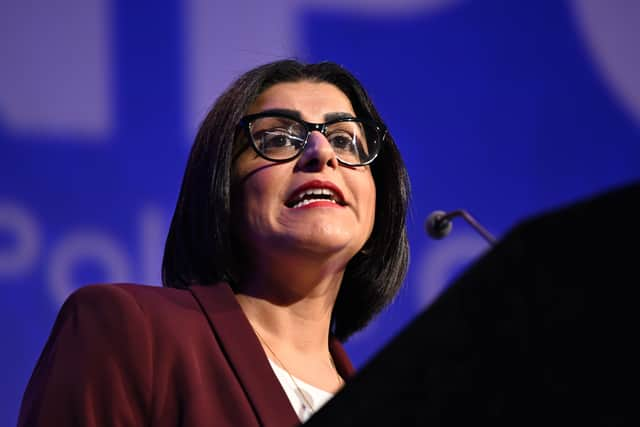
Speaking at the annual conference of the National Police Chiefs’ Council and the Association of Police and Crime Commissioners, she highlighted the pressure placed on existing forces by recent incidents.
She said the incident at RAF Fairford had required every on-duty officer in Gloucestershire, while disorder in Gosport had resulted in officers being drafted in from 13 different forces.
Policing is also facing significant financial pressures, with delegates at the conference told that the service is billions of pounds in debt and the shortfall is expected to grow by £2.5 billion by 2030.
Speaking to journalists after her speech, the Home Secretary said a timetable for the changes would be announced once the Police Reform Bill had been laid before Parliament in the spring.
She stressed that the transition would be gradual, adding: “We’re going to go slow and at the right pace because I don’t want to transfer operational responsibilities, for example, to the National Police Service until I know it’s fully ready, because I don’t want to see a drop-off in service.
“Public safety comes first, and I don’t want to do it too quickly, such that you see a drop-off in service for communities.”
However, Ms Jones has questioned whether the proposals will protect the local policing presence communities depend on.
She said: “I am seriously concerned by the Home Secretary's proposals to change local policing structures from 43 to nine regional ‘super forces’ and around 200 local policing commands.
“While I believe larger regional forces will be better equipped at tackling serious and organised crime, I fear these reforms will come at a significant cost to neighbourhood policing and community safety.
“Knife crime, domestic abuse, anti-social behaviour, serious violence and homicide, require strong accountability and local, visible policing.
“Residents want local policing that understands their communities, responds quickly when they need help, and is accountable for the decisions it makes. I am not convinced these proposals will deliver that.”
Jones warned that the changes could result in falling charge rates and rising crime, ultimately creating more victims and more perpetrators.
She also questioned whether financial pressures, rather than public safety, were driving the Government's plans.
“Public safety must be at the heart of any police restructure; however I believe this is solely being driven by financial pressures. The government has made poor decisions on taxation and as a consequence it has decided to blow the lid off of policing across England and Wales,” she said. “This plan will put the safety of communities at serious risk.”
The Government maintains that the reforms will strengthen local policing by placing commands closer to the communities they serve, while giving officers access to specialist resources and national expertise.