
“No public support” Government urged to ditch plans to create ‘mega police forces’
Mega-forces will not improve policing and lack public support
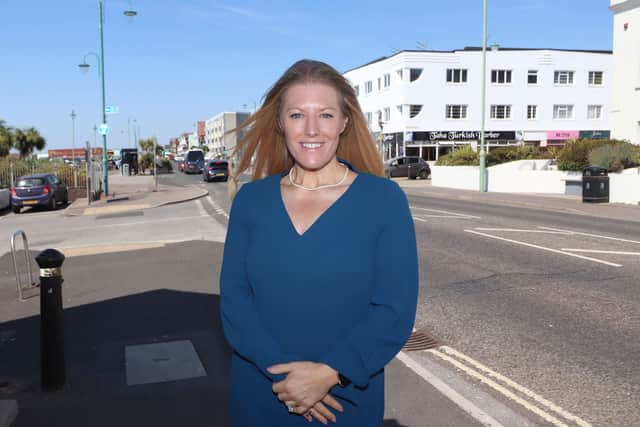
The government has been urged to ditch plans to create ‘mega police forces’ which Hampshire’s Police and Crime Commissioner Donna Jones says do not have public support.
In a joint letter to the Prime Minister, the Commissioner alongside other PCCs, has opposed the plans to reduce the number of police forces in England and Wales citing there is no evidence, academic or otherwise, showing that larger forces perform better.
The argument comes ahead of the publication of a Government-backed review of police force structures, with the report anticipated to recommend reducing 43 forces to as few as just nine.
Concerned the public have not been consulted on the overhaul, the Commissioner asked Hampshire and Isle of Wight residents what they thought of the government’s proposals during a six-week consultation.

Nearly 3,000 people responded and more than 70 per cent expressed opposition to the plans, the PCC said. Concerns are primarily centred on the potential loss of local policing, local knowledge, accountability, and community connections.
More than 70 per cent also believe accountability to local people would decline and 69 per cent believe visible neighbourhood policing would decrease.
Mrs Jones has argued that public support at a time when confidence in policing is low is fundamental to driving change, and that a reduction in forces will conflict with the Prime Minister’s devolution agenda.
She said: “If the government goes ahead with collapsing 43 forces into just nine mega-forces, just one Chief Constable will be responsible for the whole of the southeast of England. That means they would oversee an area from the border of Essex to the edge of the New Forest, and from the southern tip of the Isle of Wight to Milton Keynes.
“That geographical area is far too big for any Chief Constable to truly understand.
“Hampshire & Isle of Wight Constabulary is already one of the largest police forces in the country and far larger than many of our neighbouring forces.
“Merging police forces will undoubtedly undo the investment in local policing I have spearheaded since being elected in 2021. The restructuring process alone will be expensive and it will distract policing from its core purpose.

“The government promised to fund 13,000 additional police officers, however so far we have seen real time cuts to police funding since 2024.
“Mayors can and should be able to hold a Chief Constable to account. Forces merged into areas larger than mayoral boundaries will face diluted public accountability.
“Hampshire residents have made clear, they don't want half-baked plans to create mega forces, they simply want the Government to invest more into local policing.
“Crime in Hampshire has gone down by 11 per cent, driven by my commitment to increase police officer numbers. If police force merges go ahead, I expect neighbourhood policing to decline, and for crime to go back up.”
The letter to Prime Minister Andy Burnham also says the creation of nine regional forces would ultimately mean a council tax increase for millions of people and asks whether this is responsible or reasonable during an ongoing cost-of-living crisis.
PCC Donna Jones said: “Communities will see and feel the impact of this for years to come, on the streets and in their pocket.”
HIOW police force merger consultation results
- The consultation received 2,954 responses from residents across Hampshire and the Isle of Wight.
- Participants were generally opposed to police force mergers, with 71.36% (2,108) expressing some level of opposition compared and 16.62% (491) expressing support.
- When asked about preferred future policing arrangements, participants favoured greater collaboration between neighbouring forces while remaining separate organisations (46.92%, 1,386) rather than a full regional merger. A further 30.91% (913) preferred to retain fully local policing arrangements.
- Many participants felt that potential benefits, including specialist capabilities and resource sharing, could be achieved without a full structural merger.
- Participants generally anticipated negative impacts from a merger, with 74.66% (2,205) believing accountability to local people would decline and 69.60% (2,056) believing visible neighbourhood policing would decrease.
- Overall, the findings suggest that while participants are supportive of innovation and greater collaboration between police forces, there are significant concerns that a full merger could weaken local policing, community accountability, and frontline service delivery.