
Tommy Robinson reported to Gambling Commission over attempts to fundraise for Danny Tommo’s ‘freedom’
He has been accused of breaching UK gambling regulations
Far-right activist Tommy Robinson has been reported to the Gambling Commission over potentially illegal advertising of an unlicensed cryptocurrency betting platform to raise money for fellow activist Danny Tommo.
The non-profit organisation The Good Law Project has requested the Gambling Commission investigate alleged breaches of gambling regulation by Tommy Robinson (whose real name is Stephen Yaxley-Lennon) and the cryptocurrency gambling platform BetBolt, which is based in the East African country of Comoros.
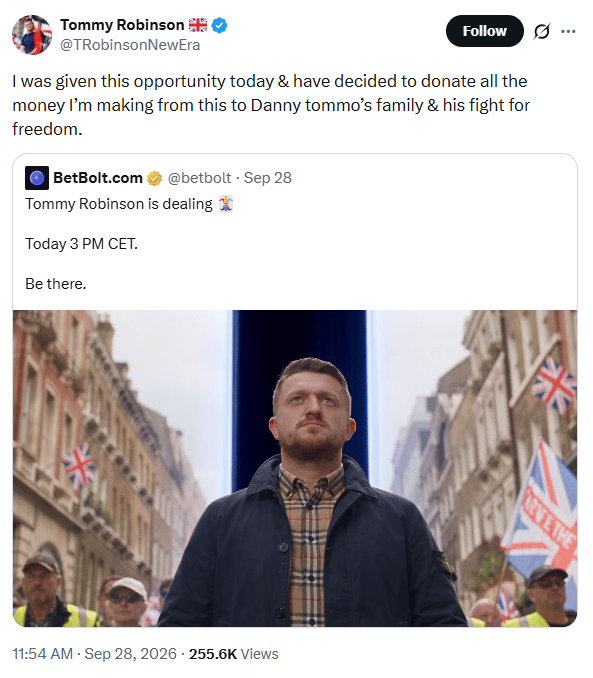
Mr Yaxley-Lennon shared a number of posts promoting BetBolt between June and September, including a post on X (formerly Twitter) from September 28, announcing him as a dealer on the platform, that was captioned: “I am given this opportunity today & have decided to donate all the money I’m making from this to Danny Tommo’s family & his fight for freedom.”
Daniel Thomas, known online as Danny Tommo, was arrested on September 23 after he livestreamed himself slashing at a migrant dinghy on the English Channel, while a French rescue worker was on-board the boat. He then told the livestream that RNLI boats carrying the migrants who were on the dinghy would land at Gosport’s Fort Blockhouse, prompting unrest in the Haslar area of the peninsula. He has since pleaded guilty to one charge of criminal damage and was sentenced to 15 months in prison on November 20.

Mr Yaxley-Lennon had advocated for Mr Thomas’ release from prison prior to his sentencing.
As well as sharing posts published by BetBolt, multiple promotional videos posted by the platform appear to depict Mr Yaxley-Lennon endorsing the company.
If BetBolt is found to have offered facilities to gamble in Britain and advertise their services, this would be a breach of UK law, as it is not a part of the Gambling Commission’s register of licensed platforms. .
A Gambling Commission spokesperson said: “It is an offence under section 33 of the Gambling Act 2005 to provide facilities for gambling in Great Britain without a Gambling Commission licence. Anyone who engages in advertising arrangements with unlicensed gambling operators is at risk of committing the offence of advertising unlawful gambling under section 330 of the Gambling Act 2005.”
BetBolt’s terms of service state: “Individuals residing in countries where gambling is illegal or restricted or where special licensing is required are strictly not permitted to create an account on BetBolt.com or use any services offered by BetBolt.com and take upon themselves full responsibility”.
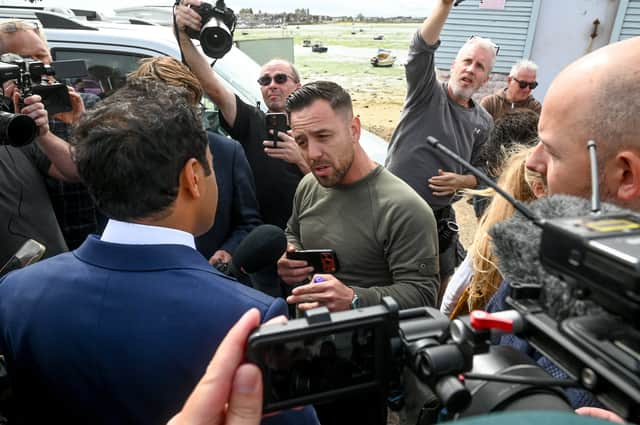
Charities have warned that Britons are still able to access unlicensed gambling websites by using Virtual Private Networks (VPN) that allows for internet user’s locations to be hidden. BetBolt’s terms of service also state that “while VPN use is not prohibited, be mindful that it may cause issues with game performance or connectivity”.
The Good Law Project argued BetBolt was not taking enough preventative measures to ensure that people based in Britain could not gamble on the site. The organisation claimed that not only could it create an account with the gambling site, but it could also deposit cryptocurrency into that account from the UK.
A spokesperson from GamCare, Britain’s national gambling helpline, said: “While blocking software can help reduce access, some unlicensed sites may still be accessible via methods such as Virtual Private Networks.
“This can make it harder for people in recovery from gambling-related harms, who have already taken steps to address their gambling but are often not protected from these sites.”
Nick Harvey from the Coalition to End Gambling Ads said: “It’s deeply irresponsible for high-profile public figures to promote any online gambling, given the serious risks of harm and addiction.”
The investigation into BetBolt is ongoing.