
F-35 stealth jets land on Royal Navy aircraft carrier HMS Prince of Wales for the first time
STEALTH jets are now embarked on the both of Britain’s new aircraft carriers for the first time ever today, in an historic moment for the Royal Navy.
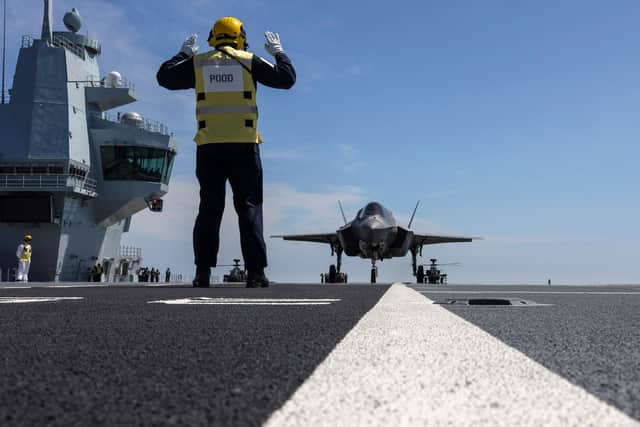
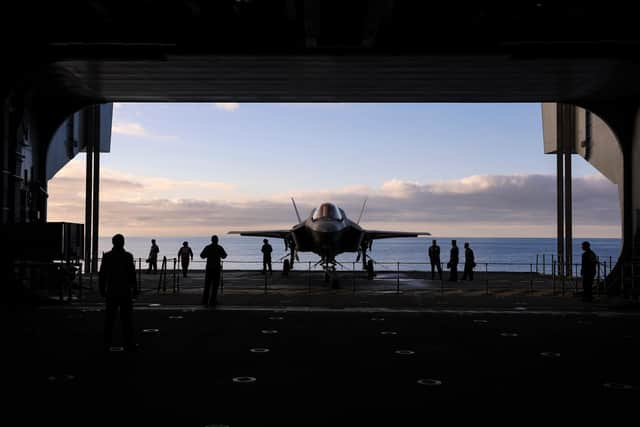
A number of F-35s from the RAF touched down on HMS Prince of Wales as part of their maiden visit to the £3.2bn warship, which is currently undergoing trials of the south coast.
The milestone means that both of the Royal Navy’s two new aircraft carriers now have planes on board for the first time, with 18 of the hi-tech jets currently embarked on HMS Queen Elizabeth in the Mediterranean.
‘It was a real honour to be the first pilot to land the F-35B on HMS Prince of Wales,’ said RAF Squadron Leader Will of 207 Squadron from Marham.


‘With all the training that we have previously undertaken with HMS Queen Elizabeth we are now looking forward to using that experience and knowledge as we work with HMS Prince of Wales as she moves towards her full operational capability.’
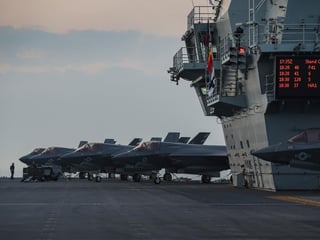
The stealth fighter shared the deck with three Army Air Corps Apaches, already embarked on Prince of Wales.
Overseeing both maiden landing and take-off was Captain Darren Houston, the Portsmouth-based warship’s commanding officer, who hailed ‘a significant milestone in the Royal Navy’s re-birth of carrier strike group operations’.
‘It is a tangible reflection of the enormous collective effort from the aircraft carrier enterprise to deliver the Royal Navy’s second aircraft carrier,’ he said.
‘I am particularly proud of the contribution made by my ship’s company in developing this world-leading, sovereign capability and we look forward in earnest to rapidly growing our experience operating the F-35B through further trials and training later this year.’
The news was passed on to Commodore Steve Moorhouse, commanding the UK’s carrier strike group from on board HMS Queen Elizabeth in the Mediterranean.
He said that the ‘strategic significance’ of the F-35 operating from Prince of Wales as well as the flagship was ‘profound’.
He added: ‘Building one aircraft carrier is a sign of national ambition. But building two – and operating them simultaneously – is a sign of serious national intent.
‘It means Britain has a continuous carrier strike capability, with one vessel always ready to respond to global events at short notice. Few other navies can do that. Britain is back in the front rank of maritime powers.’