
HMS Victory: "Bold new stage" of Lord Nelson Royal Navy flagship restoration as unseen parts on display

Critical conservation work to preserve HMS Victory has entered a “bold new stage” with unseen parts of the ship being showcased to the public.
The decade-long project to preserve and maintain Admiral Lord Nelson’s flagship is continuing at pace. The Big Repair has seen £42m worth of investment, with the 104-gun first-rate vessel now being wrapped in a redesigned scaffolding structure.
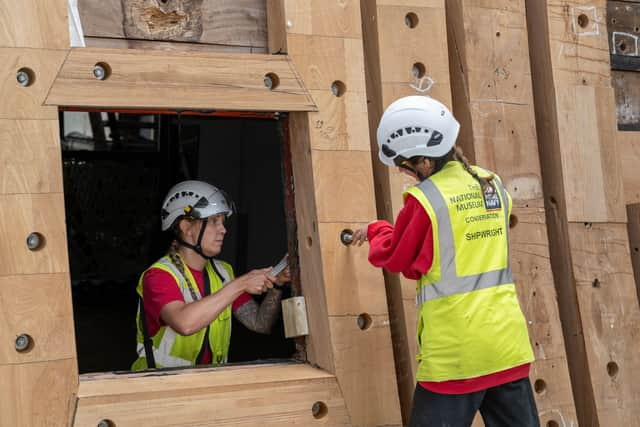
Visitors will now be able to see parts of the 260-year-old warship that have been hidden away for generations. They can also catch a glimpse of HMS Victory’s inner workings, with specialists preparing her bow and stern for the next stage of conservation works.


Andrew Baines, executive director of museum operations for the National Museum of the Royal Navy (NMRN), said: “This is a bold new stage of the project, and 2026 is set to be the most exciting year yet. For the first time, visitors will have an uninterrupted view into the inner workings of the ship and the hugely impressive engineering and skilled work that goes into that.
“We’re going to reveal parts of Victory that were last seen by the 18th century shipwrights who built her. It feels like we’re shaking hands with that team from across the centuries.”
What will the public see? What work needs to be done on HMS Victory?
The new scaffolding will include two new viewing platforms on the ship’s stern. Immersive demonstrations of shipbuilding skills will be unveiled to the public. New museum displays are also being installed to help visitors understand the layers of the ship and how the team are repairing her.
Several of the ship’s futtocks - large timber frames that form the rib of the ship - have been replaced and installed. Many of the older materials were rotting, with woodboring Deathwatch beetles attacking its frame.
The final futtocks are now being installed to replace the remaining rotten wood on the starboard side of the ship. Replanking of the hull will begin in early 2026, rebuilding the outer ‘skin’ of the ship, while managing its ongoing internal repairs.
To install the full-height scaffolding, shipwrights, riggers and conservation specialists will be removing HMS Victory’s remaining masts - one of the most demanding elements of the project. Visitors are encouraged to see the work as the flagship - best known for her being part of Lord Nelson’s victory at The Battle of Trafalgar in 1805 against Napoloen’s French ships - is not expected to be opened up like this again for decades.
Mr Baines added: “Removing the masts is a huge job and a vital part of the project plan. We plan to do it all over one night, using very specialist equipment and knowledge, so there’s a lot of pressure to get it right first time.
“Our highly-skilled archaeologists, conservation scientists, shipwrights and riggers are adapting our work every single day in response to discoveries and challenges, and we look forward to sharing Victory’s story with visitors as we continue to uncover more of her history.”