
MoD ‘does not know’ how to deliver major Royal Navy, Army and RAF reforms in full, watchdog says

The Defence Investment Plan promised large scale changes to the armed forces, but billions of pounds needs to be saved to achieve them
The Ministry of Defence is still not certain it can deliver the Defence Investment Plan (Dip) in full, the spending watchdog has warned.
In a report published on Wednesday, the National Audit Office (NAO) found the MoD had “limited assurance” it could deliver the plan, with costs expected to rise faster than funding and an unclear path to spending 3.5 per cent of GDP on defence by 2035.
The NAO said that while the MoD believed the first four years of the plan were affordable, the conflict in the Middle East had already pushed up costs by £1 billion in 2026/27 and could affect later years as well. It found the department’s procurement arm was already operating “unsustainably”, and could create a “bow wave” of undelivered projects after 2030, increasing the pressure on the MoD’s budget.

And the watchdog raised doubts about the MoD’s ability to deliver a planned £10.7bn in “efficiency savings” over the next four years, saying it lacked “mature plans” to do so. Gareth Davies, the head of the NAO, said: “Much remains to be done to ensure the Defence Investment Plan can be delivered as intended.”
The MoD also lacks a detailed plan for the final six years of the Dip “in part because it is uncertain about its future funding trajectory”, the NAO said. The report added: “The Government has committed to Nato that it will spend 3.5 per cent of GDP on defence by 2035, but the MoD does not know how and when its budget will increase.
“This trajectory is important, as the MoD needs to ensure that it and industry are prepared.”
The long-delayed Dip, setting out how the UK would spend its defence budget, was finally published in July this year after a row that saw then-defence secretary John Healey resign, accusing Sir Keir Starmer of failing to fund the plan properly.
In Wednesday’s report, the NAO said the delay in publishing the Dip, which had been due to appear in late 2025, was due to the MoD “significantly” underestimating its costs. That underestimate left a £28.8bn gap that required decisions from the top of government to resolve.
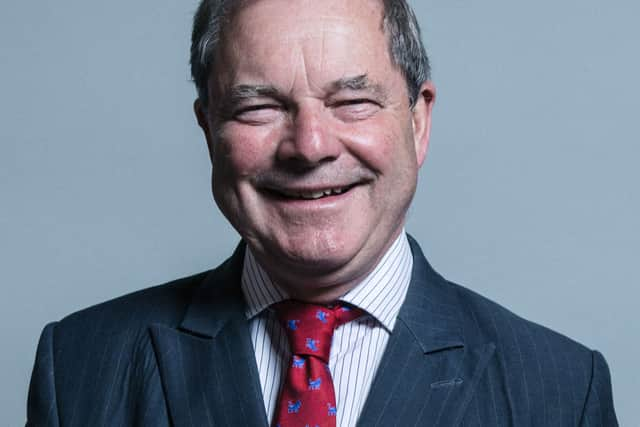
Sir Geoffrey Clifton-Brown, Conservative MP and chairman of the Commons Public Accounts Committee, criticised the MoD, saying the gap was “no small funding error”.
He said: “This was a serious failure to accurately estimate costs, which ultimately had to be resolved at the highest level of government. The MoD must now get a grip on its cost data to produce robust, realistic forecasts for the future.”
In an effort to close that gap, the MoD “significantly” reduced spending on training, which the NAO said the department acknowledged would create “capability gaps or readiness reductions”. An MoD spokesperson said: “The Defence Investment Plan will transform our armed forces and step up our warfighting readiness, investing nearly £300bn into defence.
“That investment must come with modernisation, to get the best possible value for taxpayers’ money, and to provide our armed forces with cutting-edge kit. That’s what we’re now delivering. In just four months since the Dip, we have signed over 400 contracts worth over £4bn, so Britain can meet the threats we face and keep our people safe.”
Shadow defence secretary James Cartlidge said: “This report reveals a shocking truth – in a scramble to find cash to plug the hole in their Defence Investment Plan, Labour have chosen to cut the readiness of our armed forces.
“This Labour Government has explicitly chosen to ‘reduce readiness’ when the threats we face mean we should be doing exactly the opposite. This is truly damning. Labour should be cutting welfare to fund Defence, not slashing critical spending which leaves our military weaker when we need it most.”