
Sensational walks and picture perfect opportunities - enjoy the magical treescape of the South Downs this autumn
Sensational opportunities to enjoy the South Downs this Autumn
“Autumn is my season, dear. It is, after all, the season of the soul”
Famous words from the celebrated writer Virginia Woolf, who retreated to the South Downs for her literary inspiration and loved long tranquil walks in the chalk downland.
Woolf linked the transitioning nature of autumn to a deeper inner calmness. The approaching season really can be a wonderful time to enjoy gentle activities that soothe the soul before the bite of winter hits.
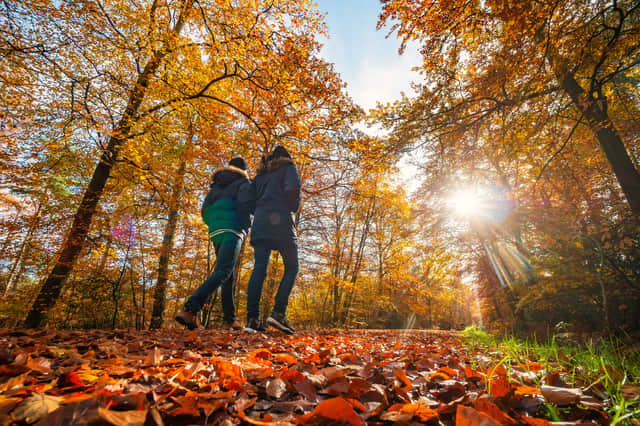

September and October are particularly lovely months in the National Park and, after a scorcher of a summer, most of us will appreciate some cooler, rainier days with some autumn mists, muddier tracks and stunning sunsets. Due to the intense heatwaves and drought, the National Park is not alone in experiencing a “false autumn”, with many crunchy leaves already on the ground and trees putting on a show of brown and orange hues.
And now the South Downs National Park Authority is sharing five restoring activities to really appreciate the magic of this time of the year in the South Downs National Park.
Autumn photography
With so much woodland, the spectacle of colour in the South Downs never fails to disappoint and it’s the perfect time to get out and enjoy some photography, whether flying solo or with friends or family.
Entries close for the National Park’s photo competition on 31 October, so there’s still plenty of time to enter the competition for a chance to win £250.
This year the theme is “Serene South Downs: Back to Nature” and judges will be looking for breathtaking images that celebrate the National Park’s serenity and those moments of slowing down and taking stock. As always there will be a dedicated wildlife and youth category, as well as a new special monochrome category, supported by Rachael Talibart’s f11 Workshops.

Renowned Brighton-based photographer Finn Hopson, who is one of the competition judges, shared some tips for autumnal photography.
He said: “For maximum serenity it may be worth heading out when the wind drops, or when there may be a bit of magical mist floating around.
“Get out early, stay out late. There’s nothing quite like being the only one watching the sun come from the top of the Downs, or having the woods all to yourself on a peaceful morning. Similarly there is plenty of serenity to be found overnight, with the moon, the Milky Way or just a few nightjars for company.
“It’s worth learning more about the flora and fauna in your local area. Paying attention to the smaller details and noticing seasonal change can be a wonderful mindful practice and can bring a deeper appreciation of the quieter aspects of the landscape.”
Acclaimed photographer Carlotta Luke, who is based in Lewes and is also one of the judges, said lighting was key and later morning or earlier evening “golden hours” made autumn a superb time to capture stunning photography.
“I would say that the best time to photograph the landscape is both early and late in the day when the sun is low on the horizon,” she said.
“When it is high, the light becomes flat and harsh and shadows become too dark to read in a photograph. Low sunlight creates shadows and contours of the landscape that make for more interesting photographs. It can help give a sense of atmosphere.”
You can enter the competition here: www.southdowns.gov.uk/care-for/photo-comp/
Woodland walks
Crunchy leaves underfoot, radiant colours, dappled sunlight, trees bejewelled with berries, nuts and seeds, and that unmistakeable earthy smell of autumn – there’s something so special about a woodland walk at this time of the year.
The South Downs has more woodland than any other National Park in England or Wales, so there’s plenty of treescape to choose from!
A woodland stroll is good for all the family and a chance to escape the daily treadmill of life without breaking the bank. It’s also proven to reduce stress hormones in adults and children alike.
If you want to go one step further with your woodland walks, forest bathing is a great option and has been found to lower blood pressure and depression while increasing energy levels.
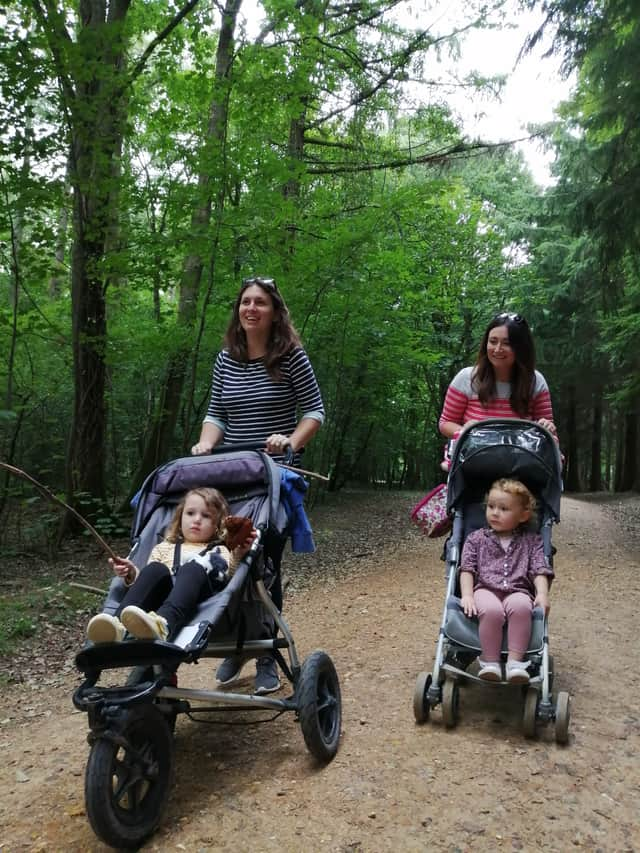
Some of the best woodlands for an autumn stomp in the National Park include:
- Queen Elizabeth Country Park – walk idea here
- Alice Holt
- West Walk – walk idea here
- Stansted Forest – walk idea here
- Singleton Wooded Estates – walk idea here (best to get the bus as limited parking!)
- Stanmer Park – walk idea here
- Friston Forest
And it doesn’t just have to be walking. Forests can be great places to go for a morning workout, run or cycle, or even a calming meditation or Qigong session. To learn more about forest bathing check out these tips from Forestry England.
Fungi spotting
Autumn is the best season to see the weird and wonderful fruiting bodies of fungi, thanks to the damper conditions and cooler temperatures.
The fruiting bodies look amazing, but most of their living matter is actually underground.
In the soil they take the form of a mass branched filaments called ‘hyphae’ that extend and intertwine with one another to collectively form a network called the ‘mycelium’. If you have ever kicked up a pile of leaves and noticed something that looks like cotton wool stuck underneath, that is mycelium! It spreads through the soil in search of organic matter to break down and feed on.

Scientific experiments have shown that trees that have fungal life support live longer and grow more vigorously, compared with those that don’t.
Some of the best places to see fungi are in one of the South Downs’ many woods, heathlands or close to historic churches.
Many of our UK fungi are toxic to humans, so please do not attempt to forage or eat any unless you are with an expert and have the correct permission.
The great thing about fungi is they’re easy to photograph even on your smartphone as they don’t fly off!
It’s actually quite a mindful activity to have a go at, slow down and look at the forest floor and this fascinating kingdom beneath our feet.
Hunt for history
What better way to spend a rainy day than visiting a cosy museum and learn more about the heritage of the area?
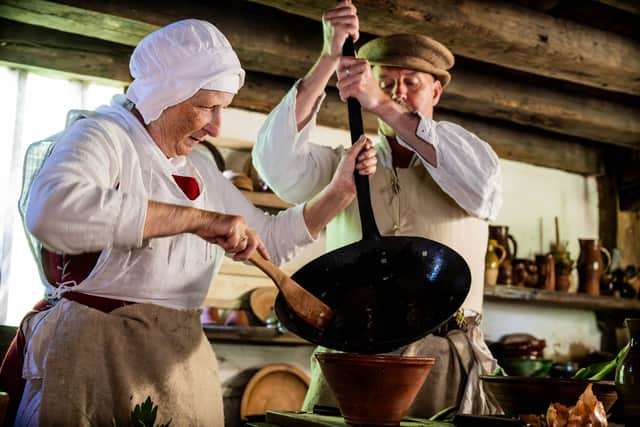
Here are five choices for a day-out:
- Amberley Museum – Located in the heart of the National Park, this museum gives visitors a chance to connect with the South’s working past and see remnants of its industrial heritage. Explore the history of communications and have a go at printing in their working print shop, the only one of its kind in the South of England.
- Bignor Roman Villa – Enjoy the stunning remains of a Roman home with world-class mosaic floors in a spectacular Downland setting. Learn why the Roman owners chose to develop such a magnificent settlement at Bignor in the 3rd Century AD and how they acquired wealth from its location.
- Gilbert White’s House – Gilbert White was a leading British naturalist of the 18th Century. Writing nearly a century before Charles Darwin published On the Origin of Species, Gilbert White observed and chronicled the natural world from his Selborne home in Hampshire. Today, Gilbert White’s House and the Oates Collection tells Gilbert’s story and his groundbreaking work in uncovering some of nature’s secrets right here in the South Downs.
- Petersfield Museum and Art Gallery – This fantastic museum, which benefited from a transformative £4m redevelopment a few years ago, is a rare example of a restored Victorian Justice Heritage site. Its extensive collections cover the archaeology and social history of the Petersfield area, together with a large photography collection and fashion and textiles collection. The Flora Twort Gallery is a dedicated art gallery with an ambitious programme of fine art and contemporary craft exhibitions and an inclusive public programme. It is also home to the Tim Wilton-Steer Collection of works by and about the poet and nature writer Edward Thomas, housed in the Edward Thomas Centre.
- Weald and Downland Living Museum – Discover what life would have been like for people in the South East of England up to 950 years ago at the Weald & Downland Living Museum. Over 50 historic buildings, rescued from various sites across the South East, provide the setting for an interactive way to discover England’s rural history.
Stargazing
After long summer days, the beauty of the South Downs night sky really comes alive in the autumn. October is a particularly good month for stargazing and Saturn will reach the pinnacle of its visibility. If you have a telescope, it’s a great opportunity to see the rings!
During the autumn, our nearest galactic neighbour, the Andromeda Galaxy, will be visible high in the southern sky and Hercules and Perseus are also great targets to look for.

Come November, “the Seven Sisters” – not the South Downs version but the celestial version – will come into full view. The Pleiades is the most easily recognisable star clusters in the night sky. The brightest stars in the Pleiades asterism (pattern of stars) glow a luminous blue, and are bright enough to be seen with the naked eye!
Wrap up warm, take a hot flask, and enjoy connecting with nature on its grandest scale! Our Dark Sky Discovery sites are great places to start your stargazing adventures. Check out our Dark Skies Hub to learn more about stargazing in the South Downs.
Wherever you go this autumn in the National Park, make some great memories! Remember to care for this amazing landscape by putting all litter in bins or take home if there are no bins, bag and bin dog poo, and bring a picnic rather than a barbecue