
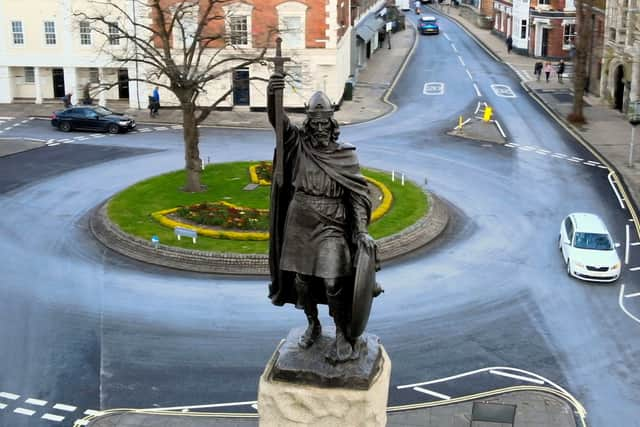
King Alfred's bones in Winchester: Researchers on quest to find monarch's remains in Hampshire say they have been snubbed by city's university

Researchers on a quest to uncover the bones of King Alfred the Great in Hampshire have run up agains
Researchers say they have been "snubbed" in efforts to dig up a car park that they believe holds the remains of King Alfred the Great.
Documentary makers claim to have identified the location of the bones of the royal - in echoes of the famous discovery of Richard III.
But after evidence was presented to academics at the University of Winchester archaeology team, the bid to excavate the area and recover the bones was shut down, it has been claimed.
Alfred the Great has been recognised as one of the country's most important rulers as the first king of a united England - yet the whereabouts of his final resting place have long been shrouded in mystery.
But author and historical researcher Graham Phillips claims to have discovered Alfred’s grave after a 13-year hunt.
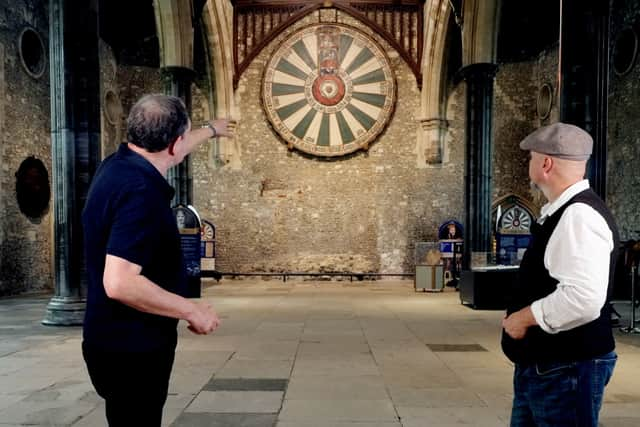

The remains are said to be just 20 yards from a scenic garden where Albert was once thought to have been buried.
But Matt Everett, of Dragonfly Films which is behind the revelations, said he had been in touch with the university to help facilitate a dig - but after initial discussions claims he's been shunned. The case has similarities to that of Philippa Langley who spent years investigating the remains of Richard III in Leicester.
In 2010, Langley won the backing of Leicester City Council for a dig and television documentary and contracted the University of Leicester Archaeological Services (ULAS) to do the excavations.
But when the University of Leicester presented their results to the world's press three years later. Langley felt sidelined and her name was also not on the exhumation licence.
A further dispute with the university in 2022 also broke out after the release of a dramatisation of Langley's search about the role each party played. Steve Coogan and production companies later agreed to a libel settlement with university official Richard Taylor over his defamatory portrayal in the 2022 film The Lost King.
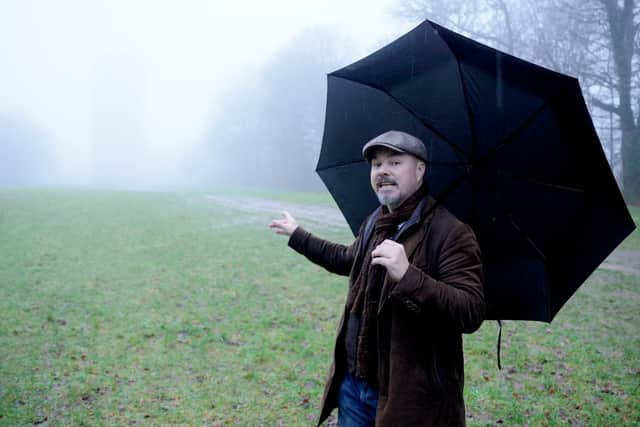
Matt said: "There are so many similarities with Richard III. They are two of Britain's greatest kings and both are potentially under a car park. This has been lost to the passage of time.
"It was the same thing for a long time with the woman who fought to excavate the car park for Richard III. 'She was someone from outside mainstream academics. She and Graham are respected researchers in their communities - but they are not academics. That poor lady suffered a lot of ridicule until she was proven right. We don't want the country to make the same mistake here."
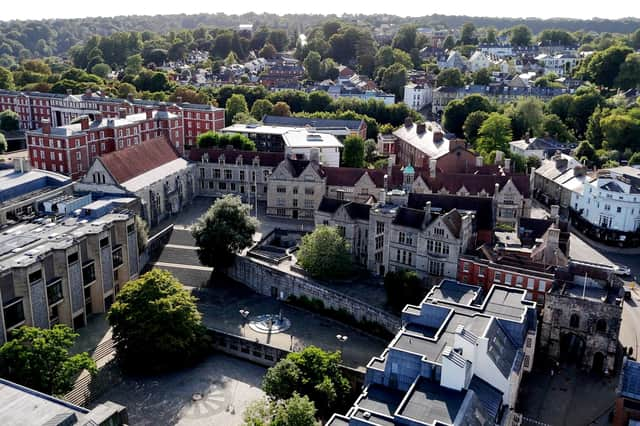
Matt said he contacted the archaeology department at the University of Winchester and sent emails back and forth with the documents.
He added: "They didn't properly look at them or read what I gave them properly. They just said this leads to a dead end. We requested a preliminary GPR. They could have sent a bunch of students to scan the ground to look for anomalies. It would be minimal effort and little to no hassle with no damage done. But they have just shut it down.
"They will have their reasons but my feeling is they are not engaging as it was not their idea. The academics did the same with the Richard III bones. They don't like anyone other than themselves proving these theories correct. If they don't engage there is a real danger of history repeating itself."
Alfred died in 899 and his bones were repeatedly moved. He was buried in Winchester Cathedral until 1110, when his remains were moved to Winchester’s Hyde Abbey where they were interred before the high altar between the bodies of his wife and son.
The abbey was demolished after the dissolution of the monasteries in 1539, and the place left in ruins.
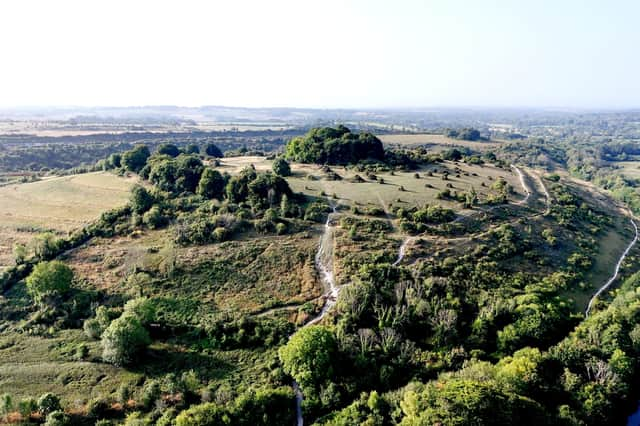
In 1866, during construction of a workhouse on the site, the English antiquarian John Mellor excavated the area, found what he thought were Alfred's bones and had them reburied at nearby St Bartholomew’s Church.
But in 2013, when archaeologists exhumed and carbon dated the bones from St. Bartholomew’s churchyard, they proved to date from over 200 years after Alfred’s death - sparking Graham's interest and search.
Graham then came across a document with a map and drawing of the stone tomb.
Matt added: "It is very suggestive that it is there. The evidence gathered by Graham is strong but I don't think they've read it properly. I'm sure they haven't looked at the map otherwise why wouldn't they want to pursue it. The world of academia is arrogant and dismissive. Three months ago we emailed them with the findings and evidence."
Matt said they were also going to pursue other options and hoped recent publicity around the potential discovery could help their cause.
He added: "The documents are clearly there. We need permission and we need the equipment. But hopefully pressure from the media will carry a lot of weight and make them take action. The research speaks for itself."
Matt said they would have loved to have done a full series based on the previous digs and focus on the finale with the work done on the car park.
He added: "We wanted to do a full dig. This is arguably Britain's greatest king. The country want to know what happened to him. People want to find it. It is exciting. He was the founder of Britain but after a lot of back and forth with academics they have been shunning us. We haven't even had a reply to our request for a GPR."
Matt said they would need permission from Winchester City Council for the excavations but said backing from the university would carry a lot of weigh to secure this. He is now looking into the possibility of a private archaeology firm.
He added: "Surely a lot of them would want to be involved in something like this. Initially we would do a scan. It wouldn't do any damage and would give us something to suggest it was there. Other than the evidence we have already presented. It is just elitist behaviour.
"It feels certain parts of England are just not interested in their own history. I can't see any reason why we don't at least try. You can see the drawing on the map. But we've been locked out by the establishment. That's what we are dealing with. It is massive and is of great historical significance. But it is frustrating when you get close but the doors are closed.
"Nothing is a dead end when there is still a discovery to be made."
The case of Richard III also took years to come to fruition. In August 2011, inconclusive ground penetrating radar results led to withdrawals of sponsorship for Langley.
An online crowdfunding appeal to worldwide Richard III Society members, who filled the gap and provided £17,367 of the £32,867 cost for the 2-week excavation.
Referencing the 2013 excavations, Graham added: "Whoever’s bones they were, they weren’t Alfred’s. So, I decided to discover what happened to them. The quest has taken me 13 years.”
With the presumption of Alfred’s bones having perished during the building of the workhouse in the 1860s, Winchester City Council turned the Hyde Abbey site into a scenic garden with the locations of what had been Alfred’s grave, and that of his wife and son, marked with stone slabs.
Phillips, however, revealed he believed evidence found that the bones of all three of them had already been moved a few decades before the 1860s.
He added: "I discovered that in 1788 a prison was built next to the area, and the site where graves were was turned into a garden for the warden’s house. I’m convinced the original bones were moved at that time."
In that late 1700s, English historian Henry Howard visited Richard Page, the warden responsible for the work at the Hyde Abbey site, to obtain plans of the ruins that existed before the prison was built.
And it was while Phillips was searching for a copy of that plan in the archives of Cambridge University that he made what he describes as an astonishing discovery.
Graham added: "Howard had written an article about Hyde Abbey published in Volume 13 of Archaeologia, the journal of the London Society of Antiquaries, in 1800. In it, he refers to prisoners employed to landscape the warden’s new garden unearthing bones which were reburied nearby, even including a map.”
Dr Katherine Weikert, Head of the School of Humanities at the University of Winchester, declined to comment on the snub allegations, but said. "Our medieval past is filled with meaning for today’s world. It is always great to see people excited about medieval history, and doubly so when it comes to Alfred here in Winchester.’
"Work undertaken by archaeologists at the University of Winchester more than a decade ago showed that finding the resting place of King Alfred is complex.
"In 2013, University of Winchester archaeologists, together with members of local community historical group Hyde900 and Saint Bartholomew’s Church in Winchester, led an excavation of an ‘unmarked grave’ at Saint Bartholomew’s parish church in Winchester.
"This was based on a nineteenth-century report that the Wessex royal bones were reinterred in this ‘unmarked grave’. The University's investigations found that the contents of the ‘unmarked grave’ were from at least six individuals from a later medieval period.
"However, as part of these investigations, a University of Winchester archaeologist also examined remains from previous excavations at the site of Hyde Abbey in Winchester.
"This led to the identification of a fragment of a pelvis bone belonging to an adult male dated between 895 and 1017. As there was no early medieval cemetery at the Abbey’s site, and this fragment was excavated from the High Altar, this may represent the only known interred portion of either King Alfred or his son, King Edward.
"The University continues to work closely with Hyde900’s community archaeology project in investigating the Abbey complex."
The location for the potential King Alfred remains was revealed for the first time in an episode of the British television series Weird Britain, on Blaze TV on Wednesday, July 8.