
Planning system slammed as 'fractured, disjointed and against locals' as new Cemex quarry opens near school

An MP has renewed his criticism of the Hamble quarry scheme, claiming the planning system is “weighted against local communities.”
Paul Holmes, MP for Hamble Valley, raised the issue during a Westminster Hall debate on December 16 focusing on planning policies for quarries.
He highlighted his long-standing opposition to the proposed aggregate quarry at the former Hamble Airfield and argued that the recent approval exposes systemic failures in the planning system.
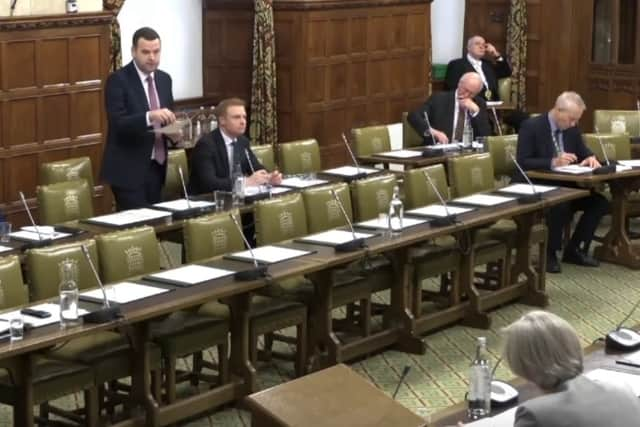

Mr Holmes said: “The planning system is fractured, disjointed and weighted against local communities.
“It doesn’t take into account air quality, water run-off into the River Hamble, and the planning inspectorate are also culpable in not looking at regulations set down by locally elected planning authorities.”
The quarry application was initially refused by Hampshire County Council’s Regulatory Committee after around 300 residents attended the meeting.
However, the decision was later overturned on appeal by the Planning Inspectorate.
A key concern raised by Mr Holmes is traffic.
He said: “There has not been a single physical consultation exercise. I will go as far as to say that Cemex are cowboys and bullies of local communities without any physical consultation to people during Covid.”

He claims that Hamble Lane, the only road in and out of the village, would see up to 200 heavy goods vehicle movements each day if the quarry goes ahead.
Mr Holmes said: “We have a process in Hamble, that I think is being slightly strange and therefore I just want to outline that briefly.”
He was particularly critical of Cemex, accusing the company of failing to engage meaningfully with residents.
He said that county council officers “chose not to defend” the reasons for refusal during the appeal process, without informing him or the community – a move he described as “deeply damaging to trust in the democratic process.”
Mr Holmes said: “What confidence can local people have on challenging the impact of their quarries if the democratic body that wanted to refuse permission in the first place is overturned by unelected inspector and pulled the rug on by the officers of the authority that refused permission in the first place?
He called the situation a “clear democratic deficit” and requested a meeting with the planning minister to discuss the case further.