
Portsmouth air quality improving, council report finds
Portsmouth has seen steady improvements in air quality, with new figures showing declining pollution levels and premature deaths linked to long-term exposure.
Portsmouth City Council has published a new Clean Air Strategy covering the next 15 years, aiming to improve public health and reduce pollution across the city.
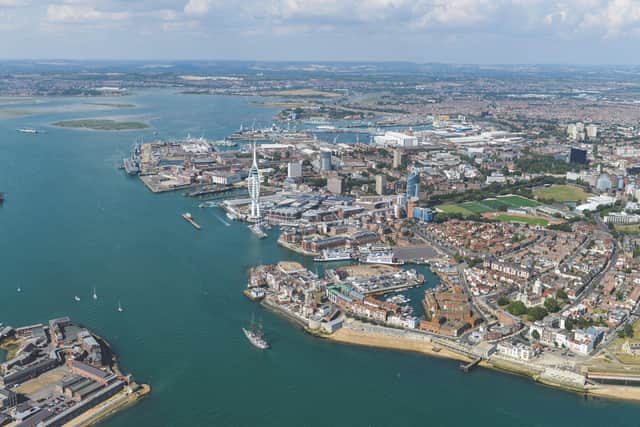

The Clean Air Strategy 2025–2040 will go to Cabinet for approval on 10 February 2026.
The report describes air pollution as “the largest environmental risk to the public’s health in the UK”. It says pollution contributes to serious illnesses including heart disease, lung cancer and respiratory conditions.
According to national estimates in the report, long-term exposure to outdoor air pollution is linked to “between 29,000 to 43,000 deaths” each year in the UK, with up to “416,000 life years lost”.
The council says Portsmouth has already made progress. Citywide monitoring shows the long-term trend for nitrogen dioxide (NO2) is falling.
In 2023, early deaths in Portsmouth linked to long-term exposure to particulate matter were “comparable to the national average”. The report says air pollution accounted for 5.2 per cent of premature deaths in the city – an improvement from 6.9 per cent in 2020.
While exact figures cannot be confirmed, the report says the reduction “will have led to fewer deaths and illness from air pollution in the city”.
Health savings could also be significant. Using 2019 as a baseline, the UK Health Security Agency estimates that reducing high exposure to NO2 could save “£2.04m per 100,000 people by 2030”.
For fine particles known as PM2.5, potential savings could reach “£6.8m per 100,000 people”.
However, the report warns that pollution levels remain too high. Concentrations of PM2.5 are still above the World Health Organisation guideline.
NO2 levels are also “still above the WHO recommendation” of 10 µg/m3, despite the downward trend.
Using WHO guidance, the city has set “interim target levels” for pollutants at five-year stages until 2040.
The report concludes that the strategy will help Portsmouth become “a healthier and more sustainable and prosperous city”.