
Where have all the superclubs gone? A look back at the biggest venues across the UK & Europe we loved and lost

Put your hands up in the air for the superclubs we loved and lost from the halcyon era of clubbing
- They were the huge haunts where like-minded music fans came together and embraced in the warm glow of lasers.
- The ‘superclubs’ were tantamount to the clubbing scene in the ‘90s and ‘00s, with A-List residencies taking place in the UK and overseas.
- But after a period of economic downturn, or in some cases just plain bad luck, many of them disappeared - so what happened to them?
It’s Saturday afternoon, and for many of you, at one point in your existence, it meant that plans to go out clubbing were on the cards – and still might be, depending on your fitness level.
But not at some of the late, great 'superclubs' that formed an important part of the 'Clubland' scene of the ‘90s and ‘00s, where DJs were superstars before The Chemical Brothers told the rest of the world that was the case, and some of the best threads clashed with boiler suits, face masks, and big, yellow smiley faces.
Super, what now, old timer?

The cheek of you to call me old, firstly...
A superclub was a destination venue that transcended the normal nightclub experience, separating itself from other venues in both scale and cultural influence. They were massive, often with capacities of over 1,500 people, and defined by their high-quality production, from their huge sound systems to their cutting-edge light shows.
These clubs were cultural hubs that pioneered new genres and set fashion trends, with people travelling from across the country – and sometimes across to Europe – to visit.
They were also defined by their A-list residencies, where the resident DJs, such as Carl Cox at Space, became as famous as the artists they were playing, creating a sense of event and spectacle that was unmatched by smaller venues.
Then they disappeared; come the mid-2000s, with younger generations drinking less (yes, it wasn't just a Gen Z trait), dance festivals became a more preferred choice for clubbers to let their hair down and with much stricter laws on licensing and noise complaints coming into place, many had to shut their doors. A report by the Night Time Industries Association noted that since 2020, over a third of UK nightclubs have closed.
Lesson learned? Maybe don’t move into an apartment where a long-standing music venue used to be.
But I digress. Let’s get misty-eyed together and take a look at some of the great superclubs that older family members might regale you with stories about, why they shut down and if they managed to continue in some capacity – albeit not to the level of their ‘superclub’ peaks
Gatecrasher One (Sheffield)
Originally opening as The Republic in 1995, Gatecrasher held their club nights at the venue, having run evenings at The Leadmill, The Arches and The Adelphi before establishing a permanent Saturday residency at the venue in 1997.
Over the years, the success of the Gatecrasher club nights became too big to ignore. With The Republic facing financial troubles, the promoters seized the opportunity, buying the venue in the late '90s for what was widely reported as a six-figure sum.
Gatecrasher was famous for its hugely successful Saturday night events and gave birth to the ‘Crasher kids’ subculture, attracting a dedicated following of trance fans, however a fire in June 2007 led to a partial collapse of the building - though luckily the small number of staff on site managed to evacuate safely.
Gatecrasher initially expressed a desire to rebuild and "come back stronger," however, inspections by engineers revealed that the building was beyond repair and that any attempt to restore it would be unsafe. This made demolition the only viable option.
The site where the club once stood remained vacant for a number of years before it was eventually sold and redeveloped into the Gatecrasher Apartments, a student accommodation block.
- Residencies: Judge Jules, Scott Bond, Matt Hardwick
The Hacienda (Manchester)
.jpeg?crop=3:2,smart&trim=&width=640&quality=65)
The Hacienda was a nightclub and music venue in Manchester, England, which was the most famous club of the Madchester music scene. It was financed by the independent record label Factory Records and its bands, including New Order.
The club first opened on May 21, 1982, in a former yacht builder's warehouse and became famous for its industrial aesthetic and the incredible production inside as much as for the artists who performed there.
Though the early years of the club were a commercial failure, it began to find its identity in the mid-1980s when it embraced the acid house scene (“acieeeeed.”)
In the late 1980s, the club became the epicentre of the UK's burgeoning rave culture and the “Second Summer of Love." However, the club closed its doors on June 28, 1997, after a period of financial difficulties and drug-related violence - as documented in the book and film, ‘24 Hour Party People.’
The venue was eventually sold and demolished, and a block of apartments was built on the site, with the building's name paying homage to its clubbing roots.
- Residencies: Graeme Park and Mike Pickering, Dave Haslam, Jon DaSilva
Sankeys (Manchester)
.jpeg?crop=3:2,smart&trim=&width=640&quality=65)
Sankeys was a renowned Manchester nightclub known for its raw, industrial vibe and its reputation for booking cutting-edge DJs and was founded by DJ Dave Vincent and Andy Spiro.
The club first opened in 1994 in a former textile mill and quickly established itself as a key part of the city's dance music scene, standing in contrast to the more polished superclubs of the era. It was a no-frills, music-first venue that was a spiritual home for fans of house and techno.
The club was famous for its resident DJs who were instrumental in shaping its sound. The most famous resident was Darius Syrossian, who held a residency there for over a decade. He was a key figure in the club's "Tribal Sessions" night, which became a global brand in its own right. Other famous DJs included Steve Lawler and Greg Vickers.
The club closed its doors in 2017 after operating for 23 years. The reason for the closure was a dispute over the building's lease. The venue was eventually sold and redeveloped, ending Sankeys' legacy as a physical club.
- Residencies: Darius Syrossian, Steve Lawler, Greg Vickers
Space (Ibiza)
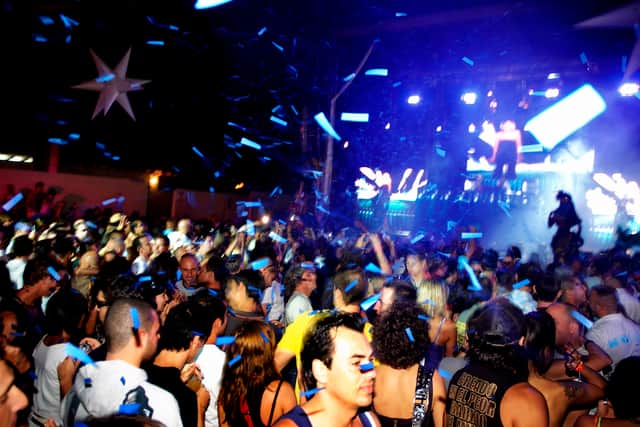
Space was a legendary superclub on the island of Ibiza. It was famous for being one of the first clubs to host after-hours parties and for its iconic open-air terrace, where clubbers would dance as planes roared overhead from the nearby airport.
The club first opened in 1986. It was taken over by Pepe Rosello in 1989, and under his guidance, it became a global institution that won Best Global Club at the International Dance Music Awards five times.
Space was famous for its resident DJs who were instrumental in shaping its sound, with the most famous being Carl Cox, who held his "Music is Revolution" residency there for 15 years. His final set in 2016 marked the end of an era for both him and the club.
The club closed its doors in 2016 after a period of 27 years. The reason for the closure was the expiration of its lease, which was not renewed. The site was sold to the owners of the neighbouring Ushuaïa club, who have since opened a new venue on the site called Hï Ibiza.
- Residencies: Carl Cox, Danny Tenaglia, Steve Lawler
Amnesia (Ibiza)
Amnesia is a legendary superclub on the island of Ibiza. It's credited as the spiritual home of the Balearic beat, a free-spirited sound that combined an eclectic mix of genres and defined the island's unique clubbing culture.
The club first opened in 1976 as a rural country house called "The Workshop of Forgetfulness," but its name was soon changed to Amnesia. It became famous for its open-air dancefloor, where clubbers would dance until the sun came up, a practice that defined the Balearic experience until a roof was added in the early 1990s.
Amnesia was famous for its resident DJs who were instrumental in shaping its sound. The most famous was DJ Alfredo, who is now credited with pioneering the Balearic beat. His eclectic mixing style caught the attention of visiting British DJs like Paul Oakenfold and Danny Rampling, who then took the sound back to the UK, sparking the "Second Summer of Love."
The club is still open, but its current incarnation is a very different experience from its early, free-spirited days. It remains a key part of Ibiza's club scene, hosting some of the world's biggest parties, but the closure of its famous open-air terrace and its shift to a more commercial sound have marked a significant change in its character.
- Residencies: Paul Van Dyk, Sven Väth, DJ Alfredo
Dorian Gray (Frankfurt)
.jpeg?crop=3:2,smart&trim=&width=640&quality=65)
Dorian Gray was a legendary German superclub that was instrumental in the birth of the country's techno and trance scene. The club was famously located in a former terminal at Frankfurt Airport, a truly unique location that allowed it to remain open until the early morning hours.
The club first opened on November 8, 1978, and was founded by Gerd Schüler and Michael Presinger to create an experience similar to New York's famous Studio 54. The early years of the club were defined by disco, funk, and soul, before it evolved into a mecca for electronic music in the mid-1980s.
Dorian Gray was known for its incredible sound system and its resident DJs, who were central to the development of the "Sound of Frankfurt" that influenced the global trance and techno scenes. Key DJs included Sven Väth, Carl Cox, and Paul van Dyk, who all played there in their early careers.
The club closed its doors in December 2000 due to a failure to secure fire safety certification from the airport inspectorate, marking the end of a legendary era in German clubbing history.
- Residencies: Sven Väth, Talla 2XLC, Frank Lorber
Feeling nostalgic about the era of clubland, superclubs and those raves we all miss? Check out our piece on the rave tapes scene, which helped propel dance music throughout the ‘90s.