
University of Portsmouth calculates Solent's natural habitat worth £1.1bn in fighting nitrates
THE Solent’s coastal habitats provides the equivalent of £1.1bn worth of measures fighting excess nutrients in the area, according to an academic from the University of Portsmouth.
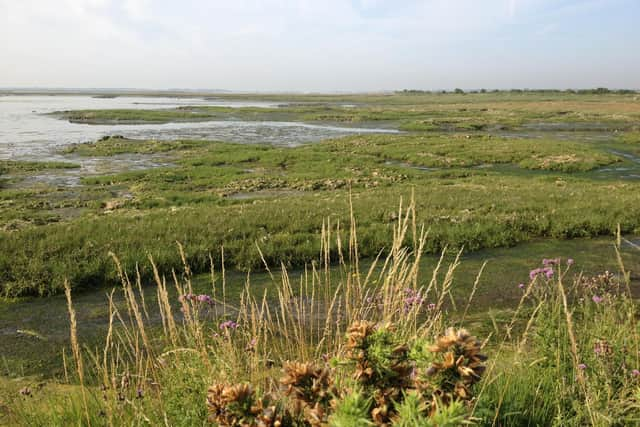
Researchers have calculated the Solent’s salt marshes, mudflats, oyster reefs and seagrass provide the equivalent of £1.1bn in annual environmental benefits in removing excessive nitrates and carbon dioxide.

Nitrates such as nitrogen and phosphorus can cause algal blooms, which can be harmful to both people and marine life. Increasing levels of carbon dioxide is believed to be behind the global issue of climate change.
However marine habitats can naturally filter out nitrates and store excessive carbon – known as blue carbon – which can reduce the economic impact of associated problems while also removing the the financial cost of the need for human intervention such as the upgrading of wastewater treatment plants.
Excessive nitrates has caused a logjam in housebuilding in the Solent area.
Scientists from the University of Portsmouth calculated that oyster reefs remove about £73m worth of nitrogen, phosphorus and carbon every year. Wetlands, such as salt marshes and reed beds, remove about £168m per year.
Less complex ecosystems, such as inter-tidal and seabed sediments, provide ecosystem services worth £509m and £395m per year respectively.
The figures were based on the stretch of the Solent between Lymington and Chichester harbours.
Dr Stephen Watson, from the Institute of Marine Sciences at the University of Portsmouth, said: ‘Coastal habitats are a vitally important component of the UK's natural capital but their contributions are often unrecognised and undervalued.
‘Our results show they could provide relatively cost-effective investment alternatives to human-generated solutions.’
The findings have been presented to the Environment Agency to hopefully help inform decision making which can affect both local and national coastal ecosystems.
The building of 12,000 new homes in Portsmouth, Gosport, Fareham and Southampton have been delayed due to excessive levels of nitrates in the Solent. Restoring such natural habitats could help prevent similar costly situations.
Around 65 per cent of the Solent’s salt marshes have been lost in the last century.
Charlotte Lines, from the Environment Agency, said: ‘This study is an exciting step forward in being able to place a real economic value on our natural environment in and around the Solent.
‘We hope this study gives local decision makers and those that set policy the assurances they need to in order to provide investment in our natural environment.
‘It is evident that our natural environment has a multi-faceted role from tackling climate change to increasing economic productivity. Our coastal habitats deserve protection, but more importantly future investment if they are going to survive and thrive.’