
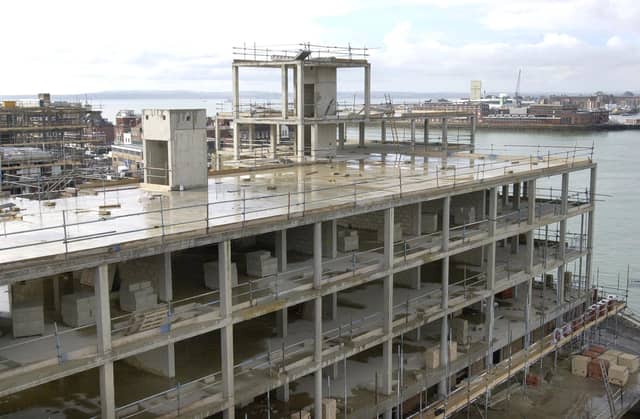

The Royal Navy’s torpedo branch also known as the torpedo school, it was commissioned in April 1876.
HMS Vernon was named after the ship of the same name, which alongside HMS Ariadne and the lighter Florence Nightingale made up its floating base initially.
In 1923, post-World War One, it was moved into the Gunwharf site and became a ‘stone frigate’ – the name given to naval establishment on land.
It was integral in the D-Day preparations.
HMS Vernon continued as a naval base, specialising in mine warfare, but ceased to be an independent command on March 31, 1986. It was renamed HMS Nelson (Vernon site) and then later HMS Nelson (Gunwharf).
It briefly became the Headquarters for the Commandant General Royal Marines and continued to be used for training.
In April 1996, the various elements comprising the establishment were split up and moved to different commands.
MORE RETRO PHOTOS: Life of HMS Illustrious | Southsea in the 00s | Portsmouth’s ghost signs
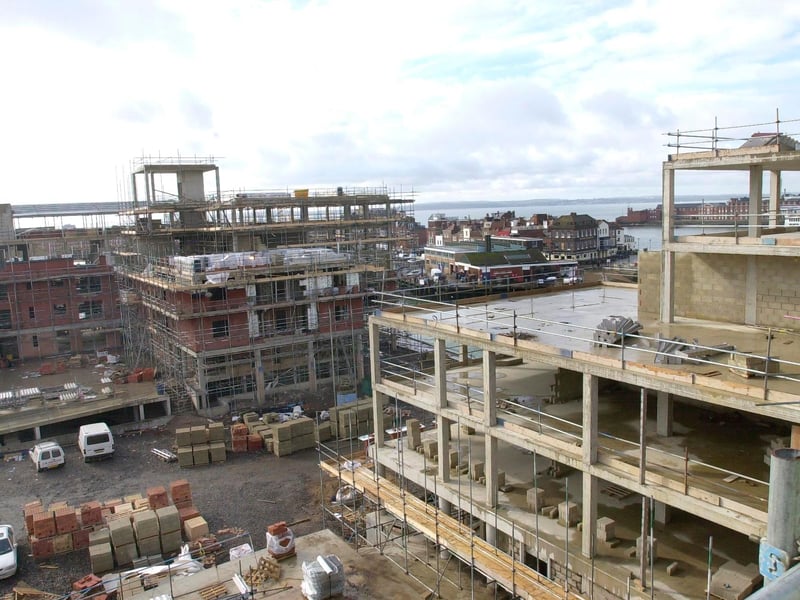
13. HMS Vernon makes way for Gunwharf Quays
Blake House (at right), at Gunwharf Quays, with a view from the upper penthouse level under construction, looking towards Arethusa House, views across The Point, Old Portsmouth, and The Solent beyond. Picture: Michael Scaddan. 011686_0025 Photo: The News archive
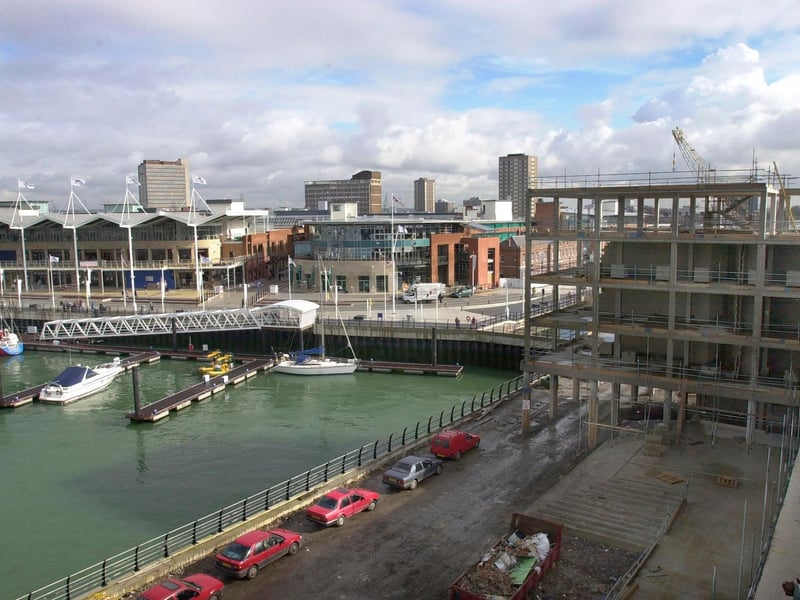
14. HMS Vernon makes way for Gunwharf Quays
Blake House (at right), at Gunwharf Quays, with a view from the upper penthouse level under construction, looking towards the commercial development across Vernon Pool. Picture: Michael Scaddan. 011686_00621 Photo: The News archive
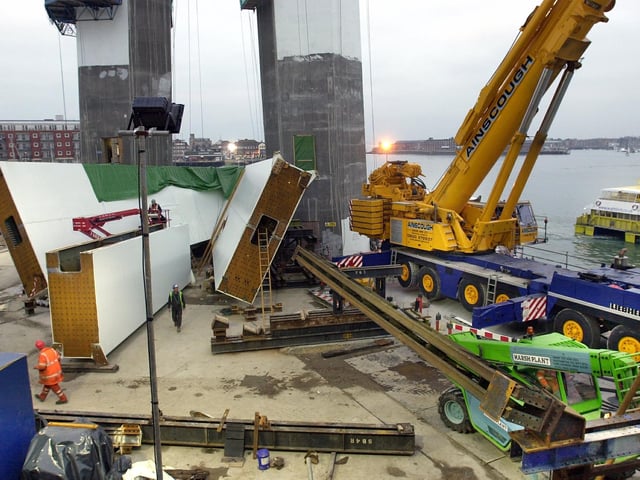
15. HMS Vernon makes way for Gunwharf Quays
The Spinnaker Tower under construction at Gunwharf Quays, Portsea 5th December 2003. Picture: Michael Scaddan. 036132-0048 Photo: The News archive
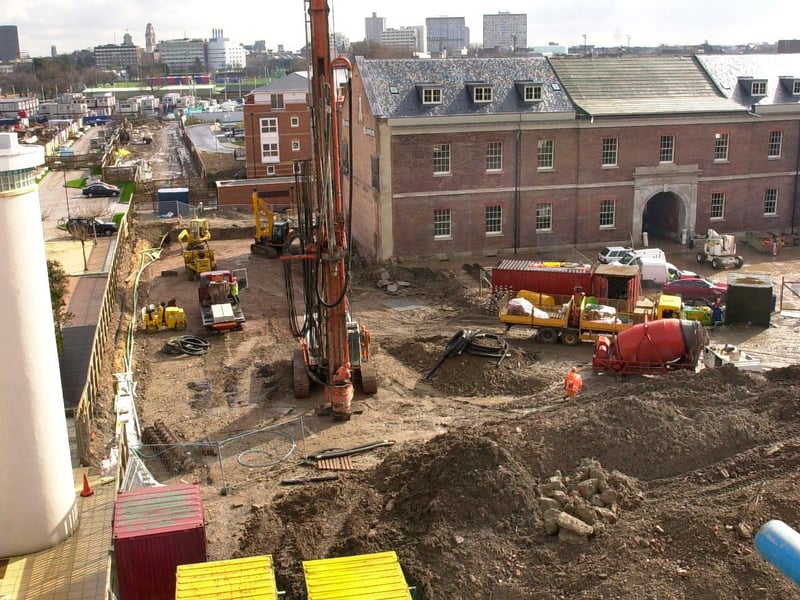
16. HMS Vernon makes way for Gunwharf Quays
The Vulcan Building, with groundworks taking place at left to lay the foundation for the extension to the complex in Gunwharf Quays. The bell tower will be constructed above the archway. Picture: Michael Scaddan. 011686_0066 Photo: The News archive