
'Fantastic' cargo-lift drone launched for first time from Royal Navy warship HMS Trent in Caribbean

The drone is designed to lift up to 68kg at a speed of 60mph
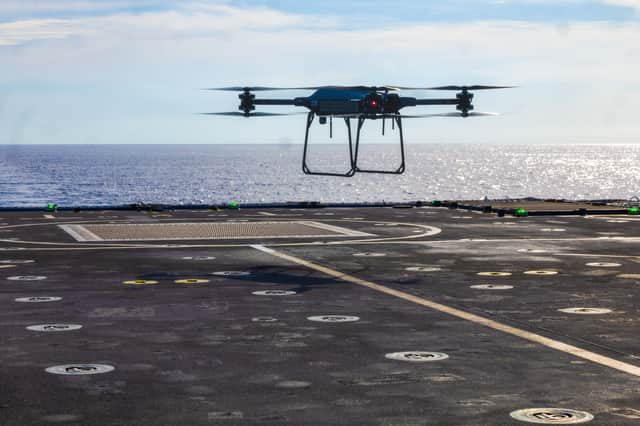
A sturdy drone has been launched from a Royal Navy patrol ship for the first time while conducting operations in the Caribbean.
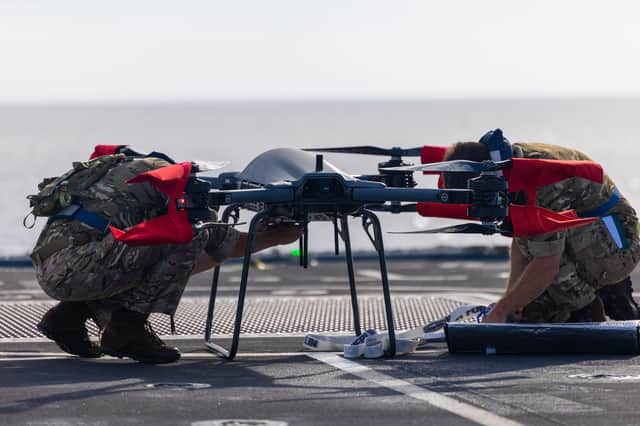
Portsmouth-based HMS Trent carried out the successful flights while patrolling the region. She has been deployed there to assists with British Overseas Territories during hurricane season. Various sorties were launched using the Malloy T-150B, preparing personnel to use the un-crewed aerial system in future operations.

Commanding officer Commander Gavin Lowe said: “This new capability is a fantastic addition to our toolset for humanitarian aid and disaster relief. The team have worked hard to integrate the system into our operations and we’re all very pleased to see the concept realised.”
The quadcopter is designed to lift up to 68kg, and fly for up to 40 minutes with a top speed of 60mph. Depending on what it’s lifting, the system can fly between 13km and 37.5km day or night and has thermal imaging capabilities. These trials marked the first time the drone was flown from a River-class offshore patrol vessel.
It’s considered a valuable asset to HMS Trent should she be dispatched humanitarian aid and disaster relief missions. The drone can be used to move critical supplies, deliver food, water and medical aid, and provide a lifeline to isolated communities hit by natural disasters.
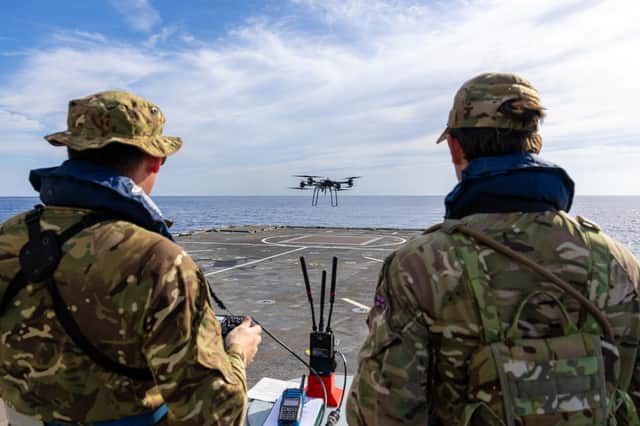
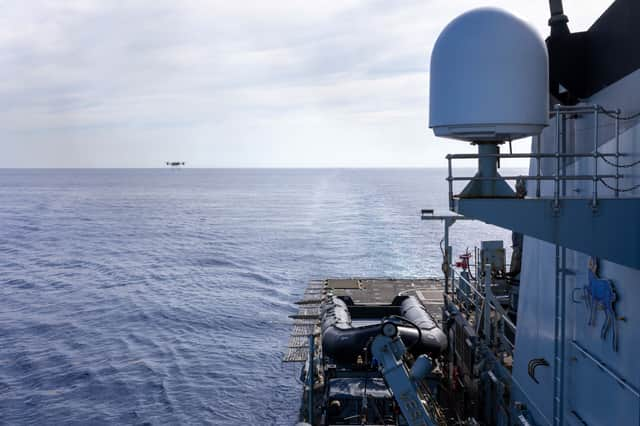
During the trial, Scout Flight 700X Naval Air Squadron completed a series of test flights to familiarise both the drone operators and ship’s company with the procedures required to safely operate the system from a warship. Launching and recovering from a moving vessel at sea, the trials demonstrated the feasibility of using heavy-lift drones in maritime operations.
While HMS Trent’s flight deck is routinely capable of operating aircraft up to the size of a Merlin helicopter, personnel needed to work closely alongside Scout Flight colleagues to safely operate the drone. Scout Flight Commander, Lieutenant Charles Harper, said: “Working with HMS Trent, we have gained valuable experience in operating uncrewed systems from the flight deck of a River Class Batch 2, paving the way for more complex resupply operations in the future.
“The lessons identified during this activity will inform future training, experimentation and capability development as we continue to explore the potential of uncrewed systems at sea.”