
Critical treaty signed aboard HMS Prince of Wales to deal with 'multiplying threats' from Russia

Allied nations have been holding crucial talks this week
Critical agreements to increase collective security in contested waters have been signed aboard the Royal Navy flagship.
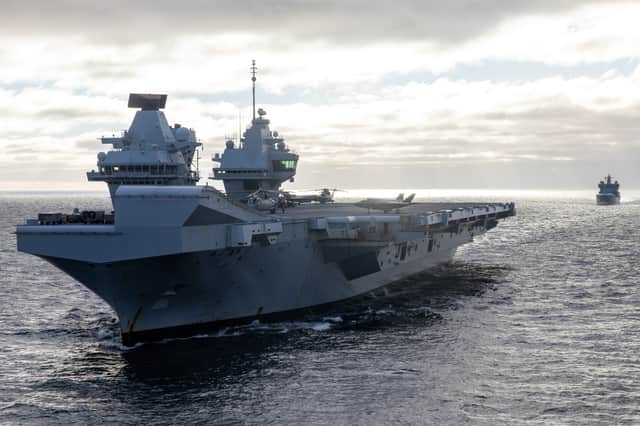
Britain has agreed a deal with allied nations aboard HMS Prince of Wales to work together in contested waters. The landmark Northern Navies Initiative, led by the Royal Navy, forms a closer partnership with Joint Expeditionary Force (JEF) nations and enhanced operations in the North Atlantic, Baltic Sea and across northern Europe.

First Sea Lord General Sir Gwyn Jenkins said: “After nine months of hard work, I’m delighted that the JEF Northern Navies Initiative has taken a huge step forward.
“Together, we have shown what is possible when like-minded nations are united by a common purpose. The threats we face are multiplying and that we must rise to the challenge before us.”
The UK will work alongside Denmark, Estonia, Finland, Iceland, Latvia, Lithuania, the Netherlands, Norway and Sweden as part of the initiative. Meny of these allies and other Nato nations are already playing a role alongside HMS Prince of Wales and the UK Carrier Strike Group, as they complete the second phase of Operation Firecrest.
The 65,000 tonne warship is currently in Oslo and is the host platform for the International Sea Power Conference. Given Russia’s increasing acts of aggression in the North Atlantic and High North, the aim is for the initiative create deterrence and strengthen its presence in contested areas.
The North Navies initiative aims to make the JEF NATO’s maritime vanguard be able to act early, combine quickly and transition into Nato command seamlessly at scale. Compatible equipment will be developed alongside each other, with participating countries operating in the same way, training to the same standard and crisis planning alongside one another.
This follows on from the Royal Navy procuring more autonomous systems to protect undersea cables, as part of the Atlantic Net. Greater interoperability means a Royal Navy frigate could transfer operational responsibility to another JEF member without losing momentum, the Ministry of Defence (MoD) said.

It added: “The UK will respond as a reliable neighbour, a partner in science and stewardship, and a steadfast ally, working with JEF partners to keep the region peaceful, stable and cooperative. It also recognises the growing threat posed by hostile activity below the threshold of armed conflict. This includes risks to critical undersea infrastructure, malicious seabed activity and other forms of hybrid aggression.”
“The JEF will make its equipment interoperable by design. This will let future autonomous platforms plug in and out of each other’s command and control systems, creating one large maritime force instead of 10 separate ones. It will also let the JEF bring large numbers of platforms to bear in a co-ordinated way.
“This initiative, signed by representatives of all 10 JEF maritime nations, delivers on a Statement of Intent proposed by the First Sea Lord in London last April.