
F-35 pilots reach new heights to set record-breaking number of flights from HMS Queen Elizabeth
PILOTS taking off from the flight deck of Britain’s future warship set a new record for the number of sorties from HMS Queen Elizabeth.
Skilled aviators from 617 Squadron launched 99 sorties with the fearsome F-35B stealth jet in a huge new achievement for the Royal Navy.
A total of 150 take-offs and landings were also recorded during the most intensive period of combat training at sea for the UK-based jet squadron.
The latest training exercise off the south coast of the UK was aimed at sharpening the deadly combat skills of the jet, which saw mock dog fights taking place, with F-35 pilots going head to head with RAF aces in Typhoon jets.
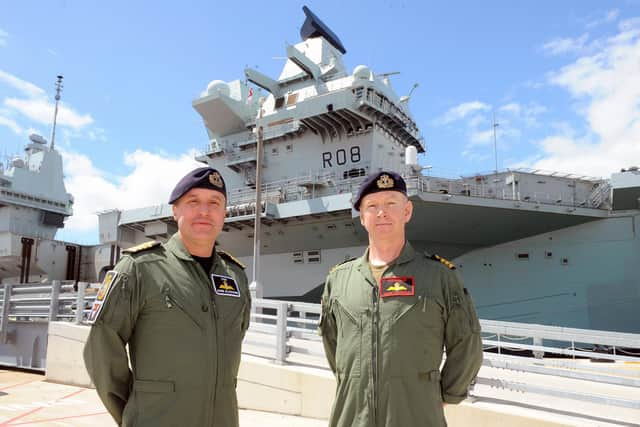

Captain James Blackmore, commander of the airgroup on HMS Queen Elizabeth, said the training had been the most demanding yet in honing the skills of the aircraft carrier’s most potent weapon: the F-35.
Speaking to The News after returning to Portsmouth on Thursday, Capt Blackmore said: ‘For us that is a huge step forward. It allowed us to generate some tempo on the deck and get away on those missions.
‘This is the first step on the road to being a fully-formed task group. In terms of tempo from the deck, this is, without a doubt, the most we have done so far.’
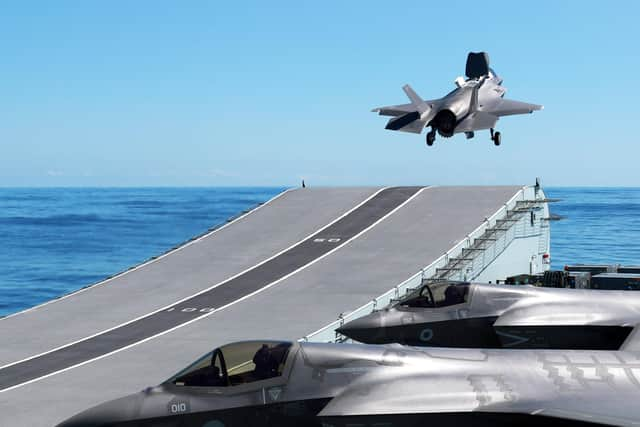
A total of four jets from 617 Squadron – known as the ‘Dambusters’ for the role the unit played during the Second World War to destroy Nazi dams – embarked on the £3.1bn warship, alongside helicopters from 820 Naval Air Squadron.
It was the first time the unit had combined with the aircraft carrier, the biggest ever created for the Royal Navy.
Commander Mark Sparrow, the commanding officer of 617 Squadron, said it was a massive moment for his team and was overwhelmed by how much they had achieved.
‘Flying from an aircraft carrier is the most exciting kind of aviation you can ever do. There is nothing else like it,’ he said, adding: ‘We have overachieved on what we had set out to do.’
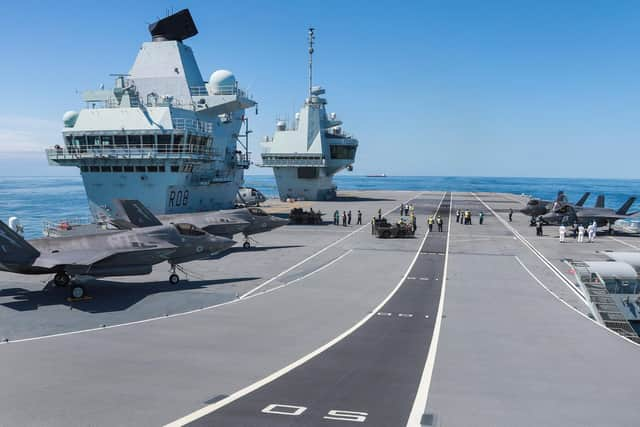
Pilots and embarked aircrew spent the first half of the training at sea rehearsing basic manoeuvres before moving onto more complex war games.
Capt Blackmore, who has served on previous Royal Navy aircraft carriers, said the F-35s were vital in protecting HMS Queen Elizabeth.
Speaking of the latest tests, he added: ‘This is all about us getting our teeth for the aircraft carrier – the F-35, which is our primary weapon system. So having the UK’s front-line F-35 squadron embarked is absolutely crucial. It’s what makes us an aircraft carrier.’
Eyes now turn to the autumn when American F-35 pilots from the United States Marine Corps will embark alongside UK aviators on the 65,000-tonne carrier.
A squadron of American jets will deploy with Queen Elizabeth on her first operational mission next year.
This will bring a phenomenal capability from the United States,’ said Cdr Sparrow. ‘They have been flying the jet longer than we have and have more experience on operations so getting that knowledge base and interlinking with them will provide a more formidable force to what we can do.’
Speaking of the F-35 – which is the most advanced stealth fighter in the world – he added: ‘This is my fourth front-line aircraft that I have flown and it is a step above anything else that is out there. That, combined with the carrier, gives us an incredible capability for the UK.’
Between 12 and 15 F-35s are expected to embark on the carrier later this year.