
'Intensive trials' pay off as drone minehunter RNMB Ariadne docks on RFA Lyme Bay in prep for Iran test

The new mine-hunting mothership is being geared up for a potential mission in the Strait of Hormuz
‘Successful’ first steps have been taken for the mine-hunting mothership ahead of potential operations in the Middle East.
The Royal Navy has docked its new crewless mine-hunting system aboard RFA Lyme Bay for the first time. It took extensive trials and tests to bring RNMB Ariadne up to speed, but the system is now in place for a potential operation to keep the Strait of Hormuz clear.
Lieutenant Commander Craig Wadley, operations officer with Commander UK Mine Counter Measures Force, said: “This was a successful first day of operations and great to see the integration of Ariadne with Lyme Bay.”
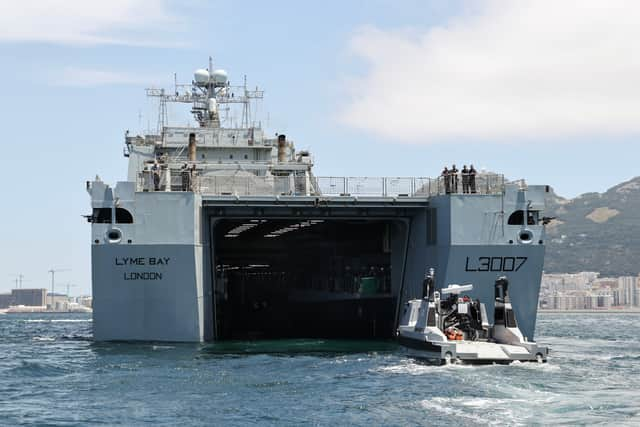

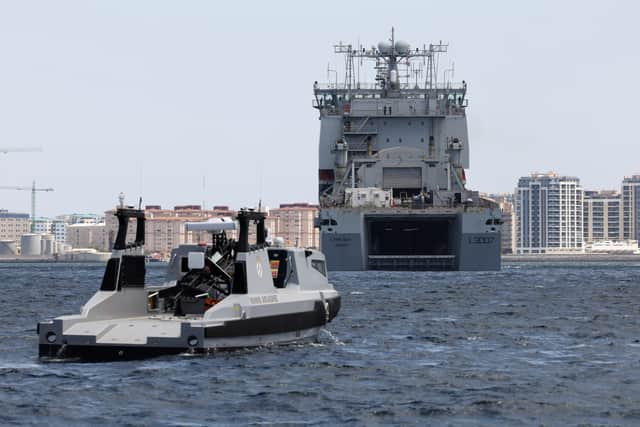
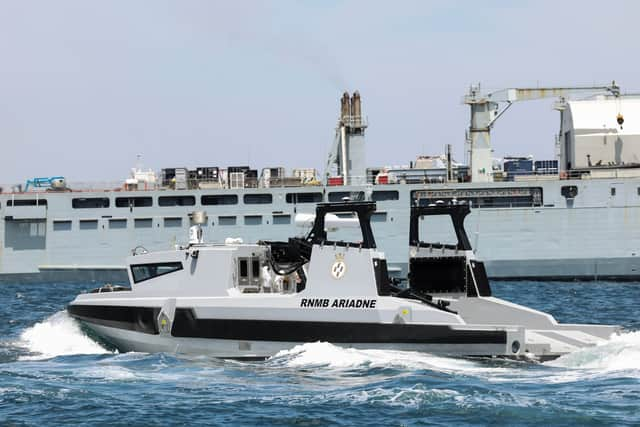
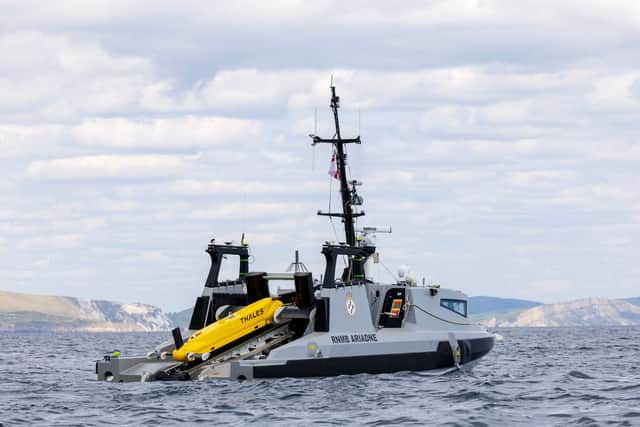
RNMB Ariadne, a 12-metre long un-crewed surface vessel designed to detect and destroy sea mines while being controlled by personnel from miles away, was delicately manoeuvred into the floodable deck of RFA Lyme Bay. She uses the Thales TSAM system, considered to have one of the world’s most sophisticated towed sonars.
They are being prepared as part of a multinational effort to keep the Strait of Hormuz open when conditions allow. HMS Dragon has already been pre-positioned in the Middle East.
This is expected to be when hostilities cease between Iran and the US-Israeli coalition. Tehran has had a stranglehold over the strategic waterway, where 20 per cent of the world’s crude oil and liquified natural gas flows through, for several months following the initial bombing raids from the US and Israel.
Prices for fuel and other commodities have skyrocketed, with preparations being made for how to keep the strait open after the war. Mines have been laid in the region and merchant ships have previously been attacked.
During the trials RNMB Ariadne had her powerful sonar tested on target on the seabed near Portland, Dorset. Personnel were embarked as a safety measure but Ariadne is designed to operate without a crew and can be controlled both locally and from a Portable Operating Centre, receiving operational and sensor data directly from the vessel to inform command decision making.
Members of the Royal Navy’s Maritime Capabilities, Trials and Assessment team, and personnel from the members of the Mine Threat Exploitation Group, operated the new capability. Lieutenant Ryan Sweet, officer in charge of Yankee Squadron unit 1, said: “Having conducted intensive trials, the opportunity to develop the capabilities further is exciting alongside the prospect of contributing to multinational operations with autonomous mine hunting equipment.
“These trials have drawn to a close an extensive period of operating the Maritime Mine Counter Measures system in Portland with the opportunities for a greater contribution exciting and challenging. As modern warfare continues to evolve at pace, it is essential that the Royal Navy advances alongside it,” added Lieutenant Tommy Walters, from the MCTA team.
“Supporting these trials and helping to ensure autonomous capabilities can be effectively deployed in an operational environment has been a privilege for both myself and the MCTA team. The work conducted here is a vital step in delivering credible, future-ready mine countermeasure capability.”
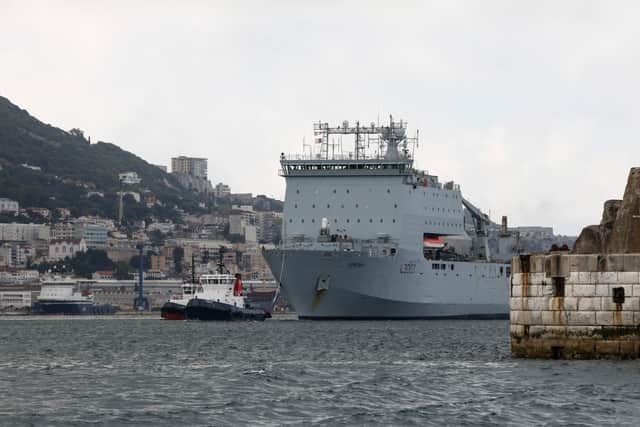
RNMB Ariadne was then loaded onto HMS Stirling Castle and brought to Gibraltar to be docked. The vessel was carefully guided into the cavernous dock by members of Yankee Squadron, before the water was drained and Ariadne was placed on a cradle in the hull. The Royal Navy’s Gibraltar Squadron provided additional safety and protection as this took place shortly after Lyme Bay had sailed from the British Overseas Territory.
Leading Hand Matt Savage said: “It all went a lot smoother that I expected, thought it was going to be tighter, but we nailed it first time.”
Petty Officer Hayley Garnett added: “I have to confess I was a little nervous. I am responsible for Ariadne’s hull and was worried she might hit the cradle, but it all went really well.”
The Royal Navy is moving towards a hybrid force, where conventional warships was deployed alongside autonomous systems, from drones to un-crewed surface vessels. Commanding Officer of RFA Lyme Bay, Captain Simon Herbert, added: “This has been a very successful week for RFA Lyme Bay which has seen the embarkation of cutting-edge mine-hunting equipment and specialist personnel.
“This, together with the considerable work conducted whilst in Gibraltar has seen RFA Lyme Bay re-role as an Afloat Forward Support Base mother ship for mine-hunting operations. She and the ship’s company have again proven the versatility and flexibility of the Bay class and the RFA to be able to depart from Gibraltar ready to deliver an effective modern capability.”