
"Ultrasonic scanners" being used by divers to analyse the hull of historic Royal Navy ship HMS Warrior

Experienced divers are using “ultrasonic scanners” to analyse the hull of a historic Royal Navy ship.
Inspection work is being undertaken at HMS Warrior to make sure she’s up to shape. Teams are carrying out the operation in Portsmouth Historic Dockyard over two days.
A spokesperson from the National Museum of the Royal Navy (NMRN) said this is part of routine maintenance to ensure the ship’s integrity. “These surveys have different objectives, and can include cleaning marine growth, ensuring mooring cables are not corroding, and testing the thickness of the ship’s hull,” they added.
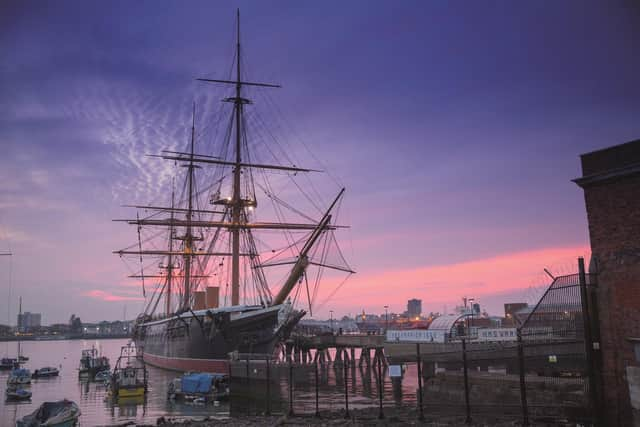

“The latter is what’s taking place this week, hand-held ultrasonic scanners will be used to check the thickness of HMS Warrior’s iron hull in 60 separate locations, keeping an eye on the level of corrosion. Warrior’s hull is an inch thick, so the dive team will be looking for a thickness as close to that as possible in each area.
“This work takes a 12-man dive team two days and is completed every five years. Other surveys take place at least once a year. The ship remains open the entire time, meaning that most visitors will not know that this work is taking place.
“This survey ensures the museum’s collection is constantly monitored to ensure it is safe for the public first and foremost, and to check that it is being appropriately cared for. Previous dives have shown no cause for concern."
HMS Warrior was launched in 1860 as the world’s first iron-hulled warship. Her impressive size and firepower made her a symbol of British naval supremacy. She was also used as a diplomatic took to escort members of the Royal Family and tour British ports.
The Victorian era warship has been based in Portsmouth after a major restoration was completed to return her to her former glory. An eight-year project in the late 1970s, underwritten by Sir John Smith at the cost of £7m, led to her being transported from Hartlepool to Portsmouth Harbour.
Her conservation team - made up of riggers, shipkeepers, conservators, painters, and other highly-trained staff - make sure the steam-powered armoured frigate can accommodate thousands of tourists every year.