
'We're struggling to contain submarines': First Sea Lord analyses Russia 'threat' amid HMS Queen Elizabeth op

HMS Queen Elizabeth has been placed under the command of Nato, with allies working in the North Atlantic and High North throughout the year
‘Very capable’ Russian submarines operating in the North Atlantic are a major threat to the UK and Nato, the First Sea Lord has said.
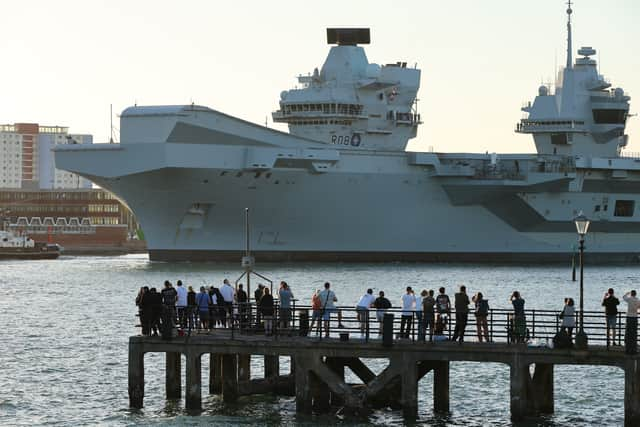
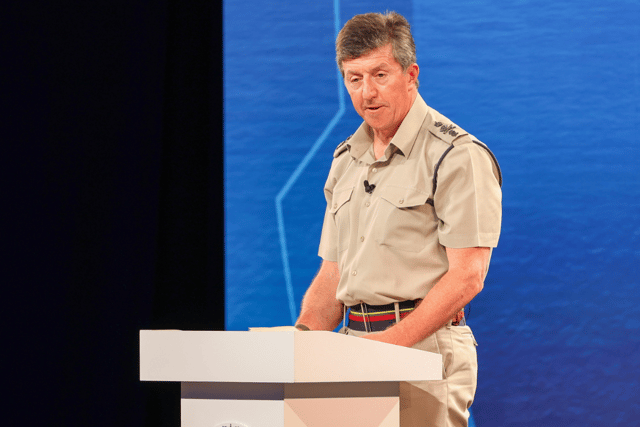
General Sir Gwyn Jenkins told the Council on Geostrategy that the Royal Navy will have to respond to the burgeoning presence of submersibles in the North Atlantic and High North - areas patrolled by Britain and her Nato allies. This comes as HMS Queen Elizabeth, assigned as the alliance’s command ship, left Portsmouth over the weekend for a series of drills.

In an interview with the think tank’s Defence Talks podcast, he said: “We are, if we’re really honest, as allies, struggling to contain very capable submarines, a very advanced so-called research programme, which is directly aimed at our critical underwater infrastructure.”
Sir Gwyn said Russia is conducting various surveillance activities under the Main Directorate of Deep Sea Research, known by its Russian initials GUGI. It operates a small fleet of specialist vessels and deep diving submarines. One of its spy ships, Yantar, was spotted loitering in the north of Scotland in November 2025 - directing lasers at pilots monitoring her activities.
Sir Gwyn added: “Let’s not kid ourselves. It’s not a research agency. It is an independently funded arm of the Russian state, whose sole purpose is to pursue the destruction of critical underwater infrastructure, in particular in the event of a transition towards war, or just as an economic leverage for the Russian state. Their subsurface systems are a real concern. The Russian threat is my immediate warfighting and national security focus.”
The First Sea Lord said one of the biggest challenges the military faces is the transformation of the forces to keep pace with the increasing threat and advancing technological change. He added that Ukraine neutralising much of the Russian Navy with un-crewed systems, and the challenges in the Strait of Hormuz, shows the route the force has to go down.
He added: “If we were to find ourselves fighting an opponent who transitioned into autonomous warfare, and we had not, we would probably lose. My job is not to lose. I don’t see it as a risk in embracing this transition, I see it as an opportunity.”
HMS Queen Elizabeth will conduct an intense programme of training and operations with allied nations over the next three months. The Royal Navy said this will enhance collective security, deterrence, and readiness. Advanced training will be carried out under the Flag Officer Sea Training (FOST) organisation, which will make sure the 65,000 tonne warship and her company of more than 800 will be prepared for any scenario.
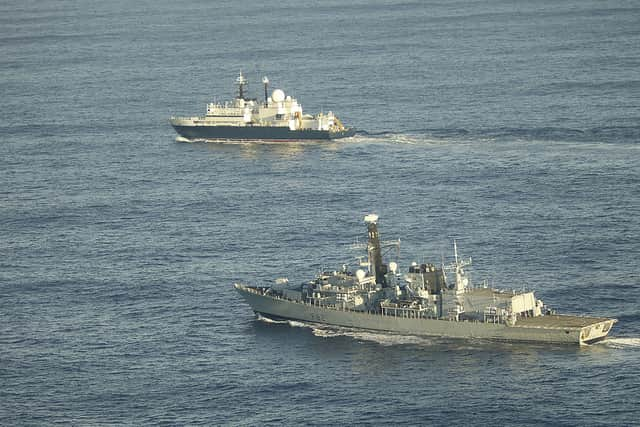
Her sister ship, HMS Prince of Wales, worked extensively with allied forces during the first phase of Operation Firecrest. This involved conducting various drills in the North Atlantic and High North in response to Russian activities.
HMS Queen Elizabeth will be the Afloat Command Platform for Nato’s Allied Reaction Force (Maritime) (ARF(M)). The carrier will rehearse how an Allied naval force would operate together in the event of a crisis. The training programme will continue into next year, including participation in major NATO exercises, and will prepare the £3.2bn warship to take over as the Royal Navy’s flagship.
Commanding Officer Captain Claire Thompson previously said: “We’ve returned from summer leave rested and ready for the next phase of our training. Sailing this autumn is a key milestone for both our NATO commitment, as the Afloat Command Platform and also on our journey back to the Royal Navy’s ‘very high readiness’ aircraft carrier, a duty we will resume from our sister ship HMS Prince of Wales in 2027.
“Sailing with an embarked battle staff, integration and training is essential whilst relearning the skills required to conduct safe and effective aviation as we ensure that we are prepared to deliver operational activity at the heart of NATO should it be required.”