
Busy HMS Prince of Wales set for Portsmouth return with HMS Duncan in midst of Nato deployment - when, times

Operation Firecrest has been in full swing, with Royal Navy sailors conducting various operations and drills
The Royal Navy flagship will be returning home to Portsmouth in the midst of a major deployment.
HMS Prince of Wales will be back in HMNB Portsmouth tomorrow morning (July 24). She has been in charge of the UK Carrier Strike Group (UKCSG) on Operation Firecrest, conducting military drills in the North Atlantic and High North alongside Nato allies.
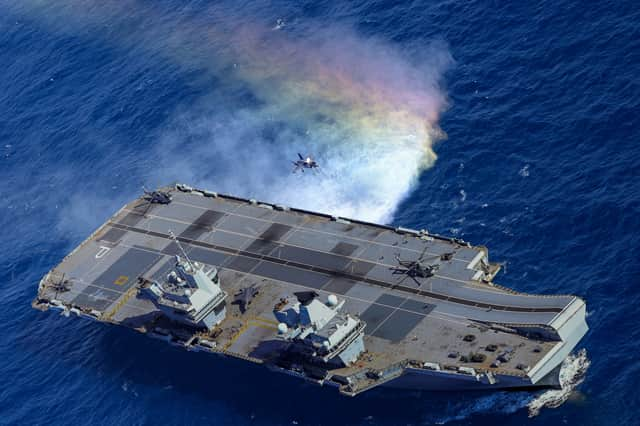

According to the King’s Harbour Master shipping movements, the 65,000 tonne aircraft carrier will be sailing past The Round Tower in Old Portsmouth at around 8.15am. Under and pilot and tug escort from Apex, Bountiful, Englishman, Indulgent, Independent, and Christina, she will be heading to the Princess Royal Jetty.
Spectators may be able to see the carrier from The Hot Walls at 7.25am when she reaches the NAB Tower. HMS Duncan, a Portsmouth-based Type 45 destroyer which is part of the UKCSG, will also be returning to the naval base.
The shipping movements list the warship as sailing past The Round Tower at 2.15pm. She’ll be given a pilot and tug escort from Bountiful, Christina, and Scotsman, and will be sailing to the Fountain Lake Jetty.
RFA Tidespring is also part of the UKCSG, but will not be heading to Portsmouth. British ships have recently completed Exercise Neptune Strike, where they linked up with a French destroyer and other Nato allies. Royal Navy personnel have persistently been conducted naval manoeuvres and aerial fighter jet drills in the North Atlantic and the High North.
The regions have been labelled as some of the most challenging environments to operate in, while being one of vast strategic importance. Climate change and warming sea temperatures are altering the terrain, with several nations looking to operate there with new trade routes. First Sea Lord General Sir Gwyn Jenkins previously spoke about the threat that Russia poses in these regions, with a burgeoning submarine fleet and spy ships threatening undersea infrastructure.
A Russian maritime patrol aircraft was intercepted by British fighter jets after flying near HMS Prince of Wales in the Norwegian Sea. The Ministry of Defence previously said the Moscow ‘Bear-F’ plane acted in an “unsafe and unprofessional” manner after “repeatedly” getting close to the aircraft carrier and dropping sonobuoys.