
Rollout of new Royal Navy frigate HMS Venturer will be late for 'a whole bunch of reasons' amid speed-up plans

Five Type 31 frigates are due to be built to replace their ageing Type 23 counterparts
Unforeseen circumstances have caused the rollout of one of the Royal Navy’s newest frigates to be delayed.
Sir Nick Hine, chief executive of defence giant Babcock, told The Scotsman that HMS Venturer will be late for "a whole bunch of reasons". Five General Purpose Frigates are being built for the Royal Navy to partially replace their aging Type 23 counterparts.
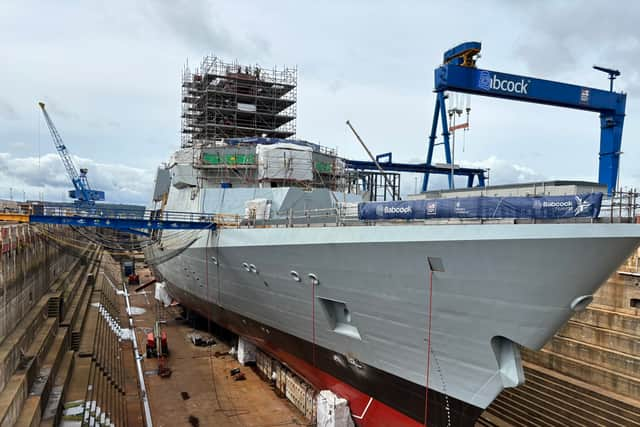

Efforts to get HMS Venturer ready earlier this decade have failed, despite such ships being vital for the Royal Navy’s push towards a hybrid force; conventional warships deploying alongside autonomous vessels and drones. Deadlines for the first of the Inspiration-class ships has slipped from 2023, to 2027 and then “by the end of the decade”.
In an interview with Scotland on Sunday, Sir Nick said the shipbuilding programme was hit by “a whole bunch of things that have taken place that you couldn’t foresee”. This included the Covid-19 pandemic, Brexit and the war in Ukraine. The project got underway in 2019.
“None of those are excuses,” he said. “They’re just things that nobody foresaw that have added inflationary pressures, supply chain costs, energy costs, labour costs have all risen over that period of time.
“So they’re all challenges. If you’ve got a programme that is fixed in terms of how much money you’ve got to spend, and you’ve got inflationary pressures, the only thing that shifts is time, particularly when you’ve got to deliver a given set of performance.”
He added: “I can only do what I can do within the envelope I’ve currently got. I would love to go faster, but that requires more money.”
The quintet of Type 31 frigates - HMS Venturer, Active, Formidable, Bulldog and Campbelltown - will be based in Portsmouth once they’re commissioned into the fleet. They’ll be tasked with operations including security patrols, anti-piracy drills, humanitarian and disaster relief operations, diplomatic engagements, escorting duties for the UK Carrier Strike Group and other roles.
Pressure is mounting to bolster the fleet, with the UK only having just five active frigates - many of which have served for several years over their expected lifespan. Sir Nick said he does not expect delays for the rest of the programme, though conversations are needed with the Royal Navy to see how quickly they can be completed.
He added that the firm is “a bit hamstrung” in terms of how flexible the programme is due to costs.
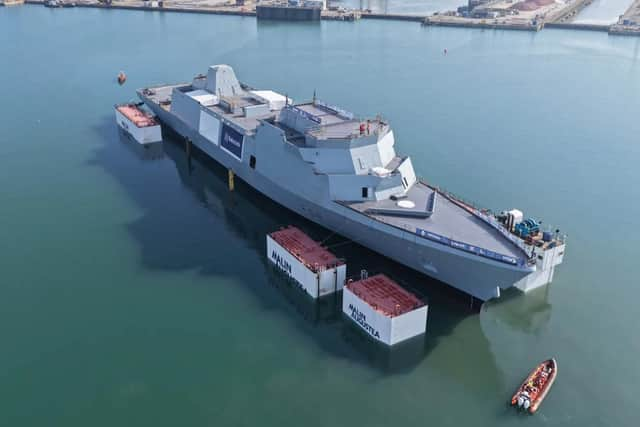
“We will still continue to deliver these platforms as fast as we can to the Royal Navy because it needs platforms,” Sir Nick said. “I’ll deliver HMS Venturer in 2028 and I’ve made it clear - my view is I’d like to deliver HMS Venturer and a large USV [uncrewed surface vessel] together.”
The Times reports Navy chiefs are examining plans to speed up delivery, though more financial support is required to make that happen. This could see Babcock workers doing double shifts, as they currently work eight hours a day after their overtime was cut to save money.
Employees are not asked to work weekends. Possible plans include the potential for more people being recruited, or the current of shipbuilders being asked to work extra hours.
A Ministry of Defence (MoD) spokesperson told the national publication: “Type 31 warships will deliver a global presence, helping deter aggression and maintain UK security. We continue to work closely with Babcock to maximise delivery performance within the contract.”