
'Set the tone': Royal Navy's historic 1st Autonomous Squadron for drone boats commissioned in Portsmouth

Formed up of around 180 personnel, they will be in charge of dozens of autonomous and remote-controlled vessels
Advanced new drone boats will be controlled by a specialist unit after a new squadron was formed in a historic first.
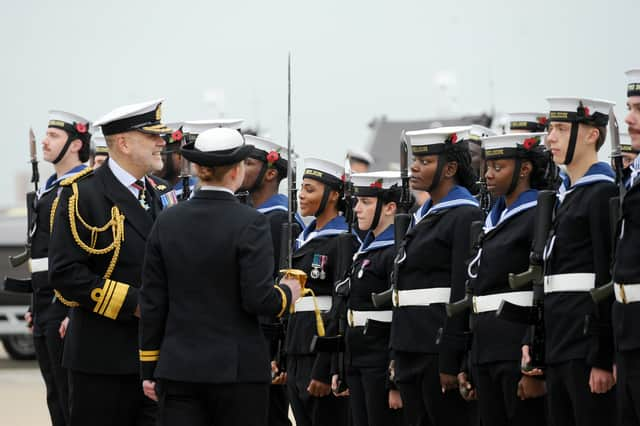
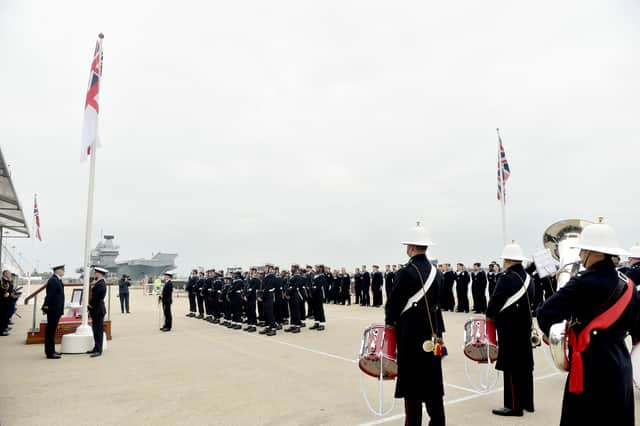
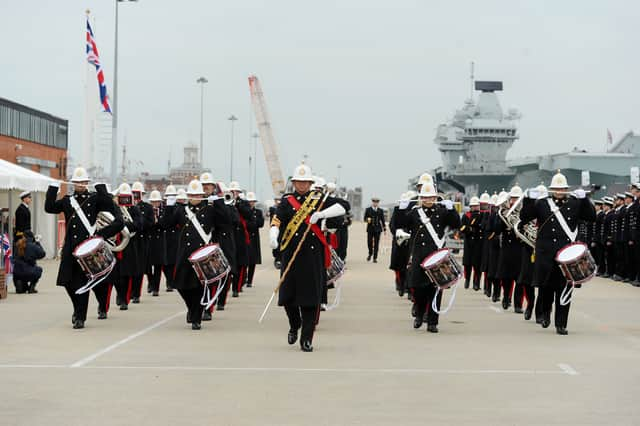
The Royal Navy’s 1st Autonomous Squadron was commissioned at HMNB Portsmouth last Thursday (November 5). Talented musicians from the Royal Marines Band Service serenaded the personnel as they formed up in front of a crowd of top brass, dignitaries and their loved ones.
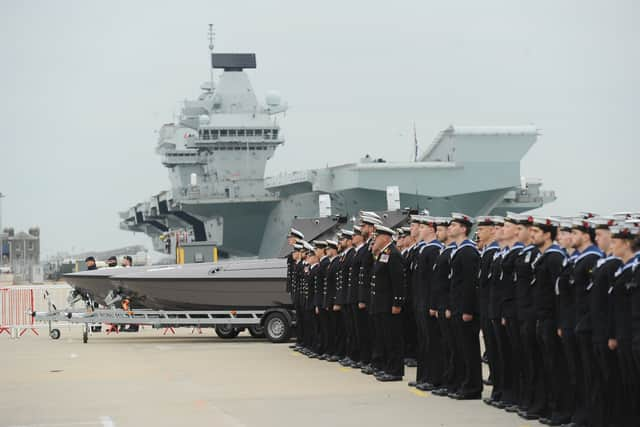

Speaking to the crowd, Fleet Commander Vice Admiral Steve Moorhouse said: “This day belongs to the ship’s company of the first autonomous squadron. Thank you for getting us off the start line.
“The seas are becoming more contested, dangerous and harder to operate in. Our ships, submarines and aircraft remain essential, but they can’t do everything on their own.
“We’ve seen how warships operating alone can be found, targeted and overwhelmed. Think of that warship working with un-crewed vessels. Fast moving autonomous boats, drones and sensors spread over a far wider area.”
“Concept to reality”
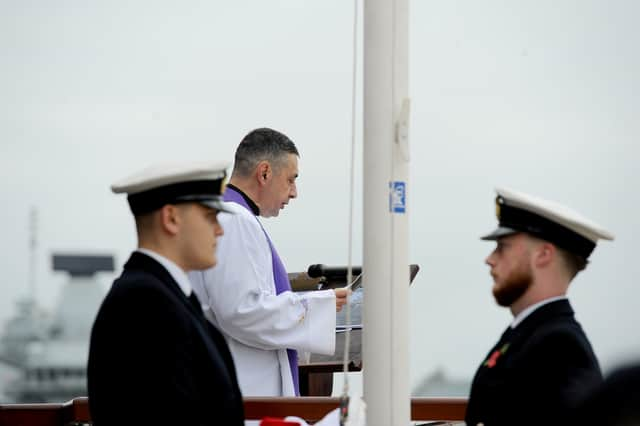
Father Robert Matau KHC, Episcopal Vicar and Principal Roman Catholic Chaplain, performed hymns and gave sermons to bless the new squadron, as they’re ready to serve the nation and The Royal Family.
The National Anthem was played and a flag raised aloft to mark the occasion. The ceremonial grandeur culminated in the traditional cake cutting ceremony, with musicians marching away from the parade square.
Around 180 personnel - the same number as a Type 23 frigate crew - will form the squadron. Split into two watches, they’ll be tasked with sustaining operations around the clock.
Drone boats will conduct missions individually and in task groups. Personnel will be asked to bring new un-crewed surface vessels into the fleet.
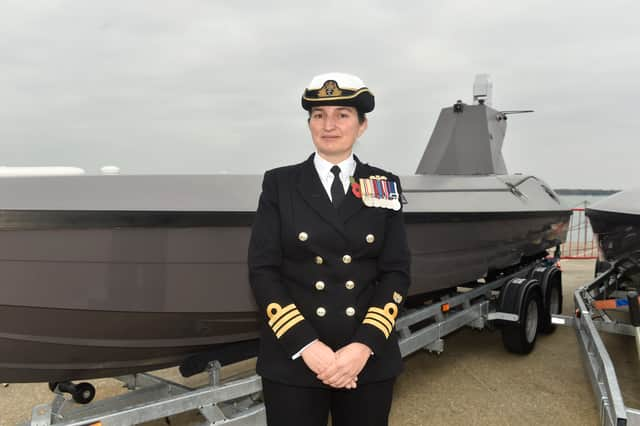
Commanding Officer of 1st Autonomous Squadron, Commander Helen Coxon, said the ceremony was the embodiment of many hours of hard work and dedication. Though this may seem a small act, it represents another step along the way towards a Hybrid Navy,” she said.
“It represents another step towards a concept becoming a reality and a change in the mentality of how the Royal Navy will operate. This Squadron is a foundation for future work towards commissioning larger autonomous ships.
“Many of our team are in their first few years within the Royal Navy and it is an exciting time for us all to be part of this journey. My greatest thanks go to all those who have worked to bring this Squadron. We simply would not be here today without you.”
What are the new autonomous ships?
Stationed in Portsmouth, the squadron will be tasked with controlling un-crewed surface vessels, drones and other advanced capabilities. The Royal Navy is pushing towards a hybrid force of conventional warships and autonomous solutions at a time where Russia is bolstering its forces in the North Atlantic and High North.
The race is on to usher in next generation technology and build the forces of tomorrow, while not letting the fleet shrink further. With just 11 frigates and destroyers, it’s hoped these new autonomous capabilities can completement Type 26 and 31 frigates, and other crewed platforms.
After the final blessing was given, personnel and their loved ones got a chance to see the autonomous vessels up close. The first on show was a Rattler-class boat. Built by SYOS in Fareham - which has the capacity to produce 50 in a month - they have already been used in various test exercises with XV Patrick Blackett.
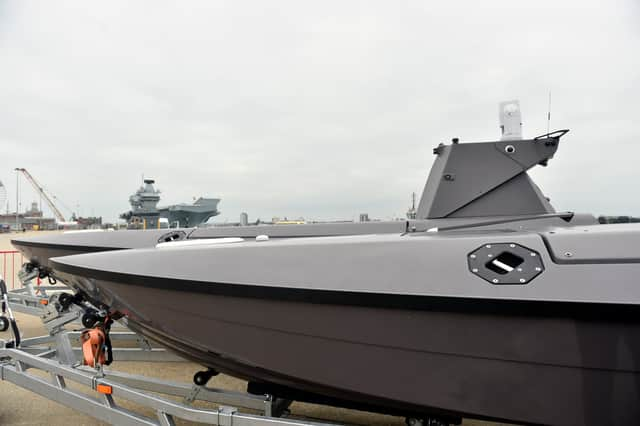
The un-crewed vessels can be used to teach sailors how to control such boats, and may conduct patrols the North Atlantic in a surveillance capacity. Given First Sea Lord General Sir Gwyn Jenkins’ concerns over the growing Russian submersible fleet, the strategic area is one of the domains they could be deployed in.
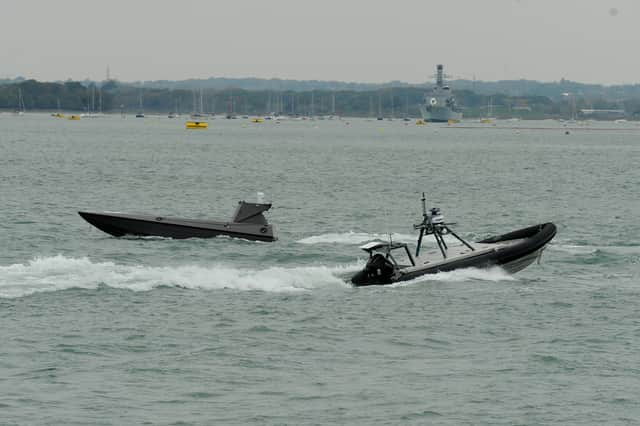
Larger K3 Scout vessels sailed alongside their Rattler counterparts. Constructed by Kraken Technology Group in Whiteley, they’ll be also assigned to the Coastal Forces Squadron and 47 Commando Royal Marines.
Under Project Beehive, 20 of them were purchased in a contract worth £12.3m. They have a range of up to 650 nautical miles at 25 knots, powered by an inboard diesel engine and a stern drive. They can be used for anti-submarine warfare missions, patrols, and other operations.
“Technology can change how we fight”
Vice Adm Moorhouse said crewed ships, submarines and aircraft will work alongside autonomous systems as one fighting team. The Defence Investment Plan saw £1.5m worth of investment into hybrid capabilities. A hybrid carrier air wing is being developed, with strikes drones and aircraft recently being trialled on HMS Queen Elizabeth.
“This is not about replacing sailors and marines with machines, but it’s about giving our people better tools for more options,” Vice Adm said. “It’ll make the fleet more lethal and harder to knock out of the fight.
“People will remain at the heart of it. Technology can change how we fight, but it’s still human judgement and courage that delivers victory.”
He added: “To every member of the squadron, you are the first. You will set the tone and set the standards. You carry the fighting spirit of the Royal Navy.
“You’ve been given something very rare, the chance to shape something new and set an example to all those who will follow in your footsteps. This is a moment for the history books.”
Speaking to reporters after the ceremony, he stressed that this is just the start of developing a hybrid force. “The future of the hybrid navy is to go bigger. This is not either warships or autonomy, it’s an and.
“This is not the end of it. We’ve proven the process, now we can scale it and do what we like.
“We may be taking strides out and slightly ahead of others, but working hand in glove with our partners - particularly the northern navies - we’re figuring out how to balance the quality in high-end crewed warships, while getting the quantity and mass we know we need.”