
Deadly strike drones fired high into the sky from Royal Navy aircraft carrier HMS Queen Elizabeth

Landmark trials are the latest step in the Royal Navy’s push towards a hybrid force
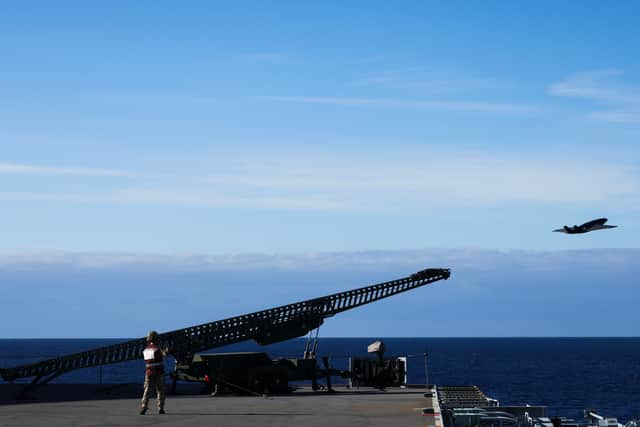
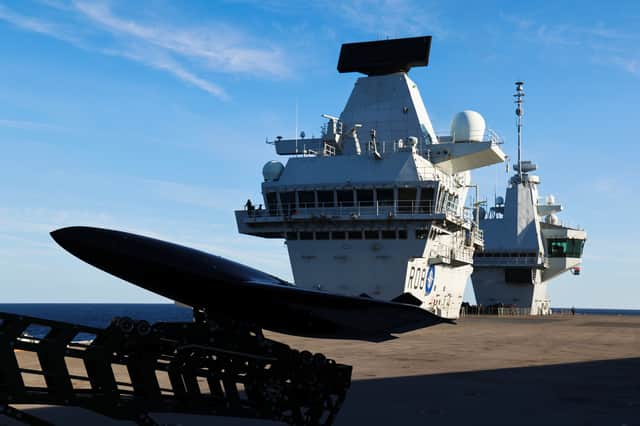
Lethal strike drones have been fired from a Royal Navy aircraft carrier for the first time.
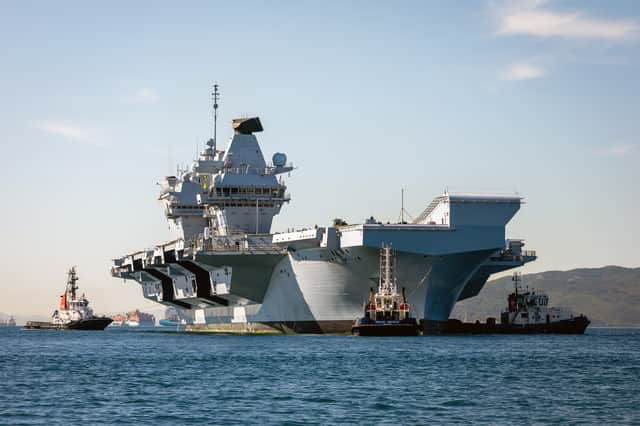
Successful trials were completed aboard HMS Queen Elizabeth while she was in the North Atlantic. The 65,000 tonne warship - currently preparing to take on the role of flagship from HMS Prince of Wales - returned to HMNB Portsmouth this morning following 12 weeks of different exercises.
The trials, which took place in mid-October, saw British made Nyan Maritime one-way drones fired from the carrier’s flightdeck. Plans are in place to launch a hybrid carrier air wing, which involves crewed and uncrewed warplanes and drones - including F-35B fighter jets - deploying in UK Carrier Strike Groups.

“It brings together crewed aircraft and drones to increase the carrier’s reach, lethality and flexibility, while keeping personnel further away from danger,” the Royal Navy added. “The trials developed understanding how uncrewed strike systems could contribute to future Carrier Strike operations and wider Defence activity.”
Several flights were carried out in the North Atlantic. This follows the first launch at sea from the Portsmouth-based experimental ship XV Patrick Blackett. Defence secretary Wes Streeting said: “The threat environment we are facing is fundamentally different from that of recent decades.
“A major determinant of military power now is who can innovate fastest. This first for the Royal Navy shows how we’re using the biggest sustained increase in defence spending since the Cold War to invest in equipment and technology that gives our forces greater reach to strike the enemy, with increased lethality.
“The more ready we are to fight and win, the less likely we are to have to. This investment strengthens our warfighting readiness and therefore our deterrence.”
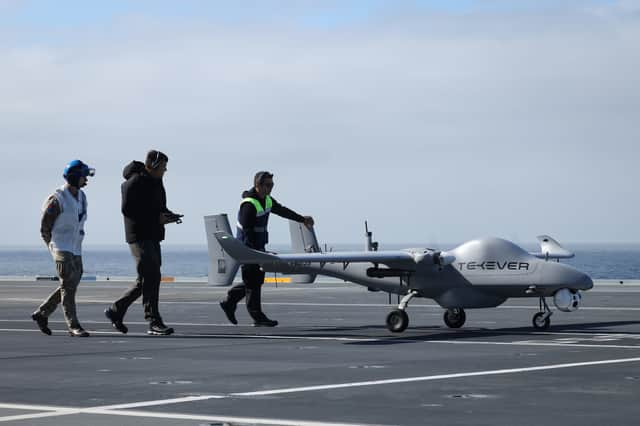
HMS Queen Elizabeth also hosted Heavy Lift Challenge 3, which saw a Tekever AR5 fixed-wing uncrewed aircraft take off and land on the flightdeck for the first time. With a 7m wingspan and capacity to carry 80kg, the AR5 can support both logistics and operational missions.
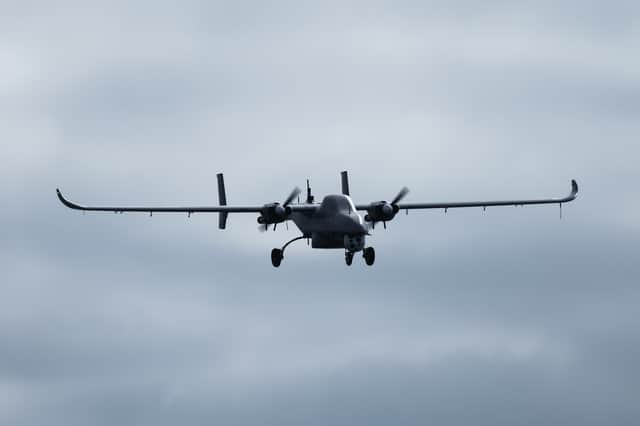
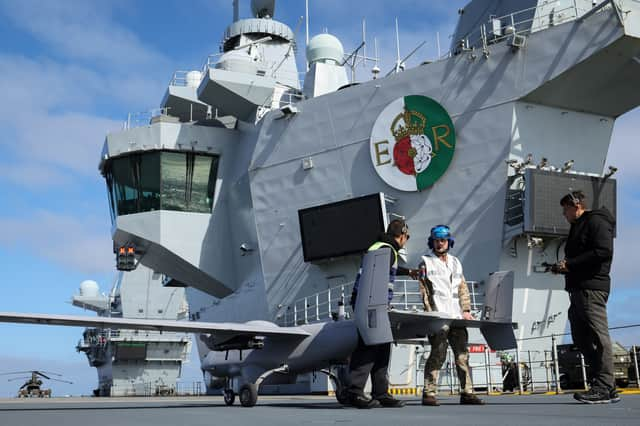
Drones have been earmarked for use in various missions such as intelligence gathering, surveillance, target acquisition and reconnaissance. It’s hoped that un-crewed systems can make the Royal Navy more flexible, while giving sailors aboard the aircraft carriers more options while on deployment.
Much of the £5bn investment set out in the Defence Investment Plan (Dip) has been put towards this. Project Pantheon will see autonomous systems developed to build the hybrid carrier air wing, where jet-powered drones will work alongside F-35B fighter jets.
At least £1,3bn has been allocated for a hybrid fleet of crewed and un-crewed ships, with the first of the large autonomous vessels due in service by 2030. Low-cost and long-range one -way attack drones will be produced for the Royal Navy, Army, and RAF, in a £210m minimum fund.
Lieutenant Commander David Burton, trials sponsor for Navy Capability, said: “These trials give us the evidence and confidence to decide how uncrewed systems can work alongside crewed aircraft. The lessons will help us build a hybrid Navy that gives commanders greater choice and ensures our carriers remain at the cutting edge of naval warfare.”