
‘I’ve got what I’ve got’: Royal Navy Top brass addresses small fleet amid ‘go bigger’ drone boats promise

The UK currently has just five frigates as pressure to build modern replacements fast enough mounts
Advanced drone boats will play a key role in the future Royal Navy fleet without abandoning crewed warships, a top naval figure said.
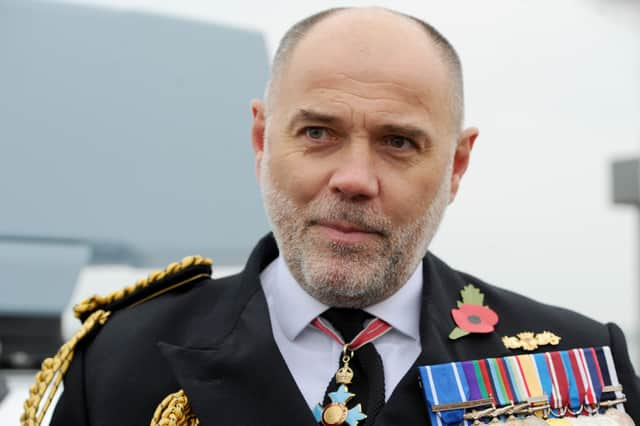
Fleet Commander Vice Admiral Steve Moorhouse has insisted that conventional warships will continue to play an important role in operations, despite dwindling numbers. This comes as the 1st Autonomous Squadron was commissioned in Portsmouth on November 5.
The Royal Navy is pushing towards a hybrid force, where frigates and destroyers will be supplemented with un-crewed capabilities and drones. While work is being undertaken to roll out autonomous vessels at speed, the force has to contend with the yawning frigate capability gap.

New Type 26 and 31 warships will mostly be rolled out in the 2030s, with the first being available by 2028 at the earliest. This comes as the number of operational Type 23 frigates - which have served years beyond their expected retirement dates - has dwindled to five. There are fears that more will have to be retired before new replacements are ready.
Vice Adm Moorhouse said he’s aware of the struggles with the lack of frigates, but the first replacement is on the horizon. “I would love to have as many frigates and destroyers as every Fleet Commander would,” he told reporters.
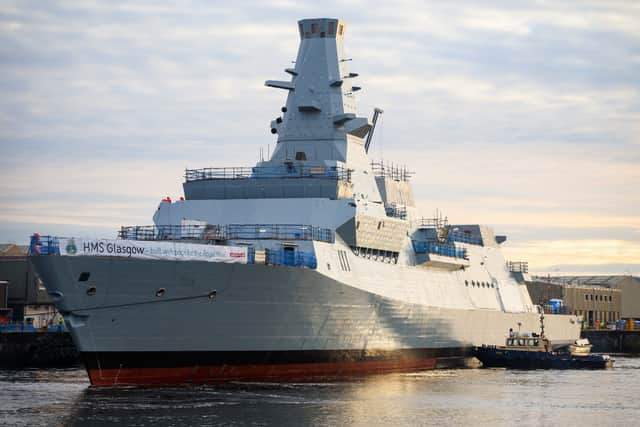
“I’ve got what I’ve got. I can tell you my next one is coming in months, not years. I’ve got over 100 people crewing the first Type 26, HMS Glasgow. She’ll be coming and they’ll follow quickly thereafter alongside the Type 31s.”
Submarine-hunting Type 26 frigates are being built by BAE Systems in Glasgow. A total of eight City-class vessels have been ordered, and will primarily be used to face a growing Russian submersible force in the North Atlantic and High North.
This is alongside five Type 31 General Purpose Frigates being built by Babcock International. Stark delays have hit the programme, but chief executive Sir Nick Hine remains bullish that no further deadlines for the Portsmouth ships will be missed.
The Defence Investment Plan (Dip) set out £1.5m for hybrid capabilities, with plans to develop a hybrid carrier air wing with drones, un-crewed surface vessels and autonomous submersibles.
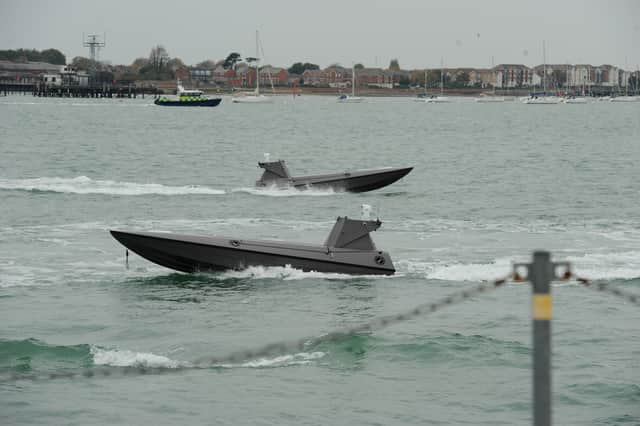
Small Rattler-class and Kraken K3 Scout vessels are in the hands of sailors. Larger platforms such as the Common Combat Vessels (CCVs) are in the concept phase, with plans to also procure Type 91 un-crewed missile platforms, Type 92 autonomous underwater sensing platforms, Type 93 Extra-Large Uncrewed Underwater Vehicles, and Type 94 un-crewed sensor platforms.
Vice Adm Moorhouse said crewed ships will still be the beating heart of the fleet. “The future of the hybrid navy is to go bigger,” he added. “This is not either warships or autonomy, it’s an and.
“This is not the end of it. We’ve proven the process, now we can scale it and do what we like. We may be taking strides out and slightly ahead of others, but we’re figuring out how to balance the quality in high-end crewed warships, while getting the quantity and mass we know we need.
“The North Atlantic is our back garden and it's incredibly complex. By spreading out more points of presence, you’ve got a better understanding of what is going on. A Type 45 destroyer is a single point of vulnerability.
“If you’ve got multiple sensors and effectors, with a command node, you’ve got much more resilience. Integrating that with allies and partners, you’ve got something quite impressive.”