
Retirement of Royal Navy Type 23 frigates kept ‘under continual review’ as they age out of shrinking fleet

The force currently has five frigates and six destroyers, well below targets for the surface fleet
Aging Royal Navy ships will be kept “under continual review” as they are edging closer to retirement.
The remaining group of Type 23 frigates, launched between 1994 and 1999, will soon be decommissioned to make way for more modern ships. Problems have arisen with the size of the frigate force though, with advanced Type 26 and 31 replacements still years away from being ready.
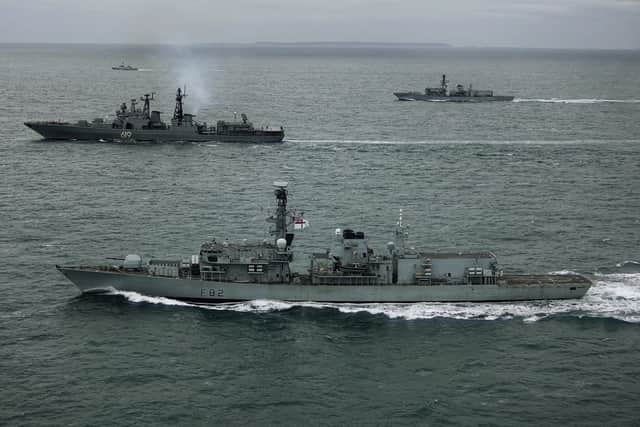

The earliest will be launched in 2028, but the majority of them be introduced to the fleet in the 2030s. This famine has already caused problems with availability and a lack of time at sea for sailors.
Minister of defence readiness and industry, Luke Pollard, confirmed in a parliamentary written question that the situation is being managed. Responding to Conservative MP Ben Obese-Jecty, he said: “The planned out of service dates for Royal Navy ships are kept under continual review and may change depending on operational requirements.
“The transition from the Type 23 frigates to the new Type 26 and Type 31 classes is being carefully managed to maintain defence outputs, taking account of factors including the material condition and supportability of the ageing Type 23 fleet, operational requirements, affordability and the introduction of replacement capability.”
The remaining frigates are HMS Somerset, Sutherland, Kent, Portland and St Albans. The latter played a role in supporting exercises with HMS Prince of Wales and the UK Carrier Strike Group.
Engineers at Babcock International are building five Type 31 frigates, with BAE Systems staff constructing eight Type 26 submarine hunting warships. Successive governments delayed ordering replacements, leaving modern replacements not ready for when older counterparts retire.
Hulls on the Type 23 vessels are designed to last for 18 years, but many of these vessels have served for around 30 years despite the safety risks. The Royal Navy has had a minimum requirement for 19 frigates and destroyers since 2010, with the gap previously described by defence committee chair, Tan Dhesi, as a “wakeup call”.
The committee’s defence in the high north report estimates the combined towed array frigate numbers will fall to four in 2029, three in 2030, and two in 2031. Numbers won’t rise to eight until 2037. Sources told specialist publication Navy Lookout that two of the remaining five Duke-class ships are expected to be declared unseaworthy in the next few months.
Addressing the frigate gap to reporters recently, Fleet Commander Vice Admiral Steve Moorhouse previously said: “I would love to have as many frigates and destroyers as every Fleet Commander would.
“I’ve got what I’ve got. I can tell you my next one is coming in months, not years. I’ve got over 100 people crewing the first Type 26, HMS Glasgow. She’ll be coming and they’ll follow quickly thereafter alongside the Type 31s.”