
Council building safety works face delays over staff shortages and red tape
Council aims to complete major safety works by 2030 despite mounting challenges
Major safety works across Portsmouth’s council homes are facing mounting challenges, with staff shortages, unexpected repairs and red tape threatening to slow progress.
Portsmouth City Council is carrying out a major programme of building safety works across its housing stock, but staff shortages, extra repairs and delays in getting approval are creating challenges.
A report to Darren Sanders, the council’s cabinet member for housing and tackling homelessness sets out progress on fire safety work across high-rise, mid-rise and low-rise blocks.
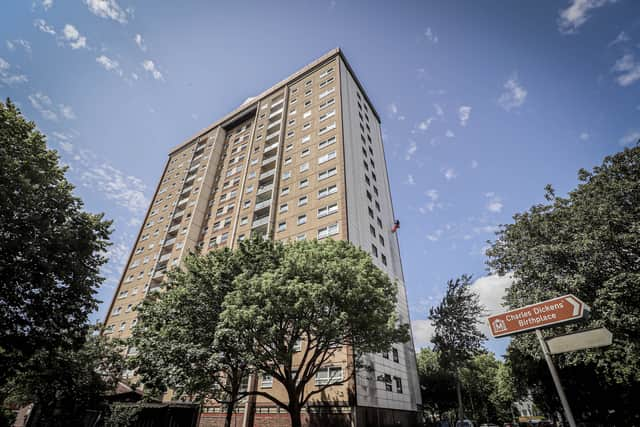

The programme aims to deliver works such as fire doors and sprinkler systems following a regulatory judgement issued in January 2025.
The council is still aiming to complete the work by the end of 2030, although several projects are facing delays.
The report also updates plans for four Large Panel System (LPS) blocks – Tipton House, Edgbaston House, Barkis House and Nickleby House.
The council agreed in August to move residents out of the four blocks permanently over a four-year period.
Once everyone has been rehoused, the buildings will be closed, made secure and prepared for demolition.
The first priority is residents living on the upper floors, where extra safety measures are in place.
Of the 92 households needing visits from the council’s housing team, 85 have now been visited. Nine households have already received offers of another permanent home.
The report highlights several problems which have made the wider programme more difficult to deliver.
Investigations into high-rise blocks have found more work is needed than was first expected including opening up hidden areas of buildings, such as service cupboards and pipes, to check their condition.
These inspections have found further fire safety work is needed, as well as problems with some water pipes and other services which are nearing the end of their useful life.
The extra work has meant some projects have taken longer to prepare.
Getting approval from the Building Safety Regulator has also taken longer than expected as higher-risk projects must receive Gateway 2 approval before construction can begin.
The report says the average wait for approval for external repair work was 33 weeks in the 12 weeks leading up to August 31, 2026.
The council has also experienced lengthy waits. Approval for work at Westminster House took 30 weeks, while the application for Wingfield Street took 28 weeks.
Staff shortages have also affected progress.
Three senior building surveyors left the council’s Housing Revenue Account (HRA) projects team during the first part of 2026.
This left fewer experienced staff to manage projects at a time when the amount of work was increasing. Other members of the team had to take on extra responsibilities.
Recruitment has since improved, with the team expected to be back to full strength by the end of November, provided new employees start as planned.
Delays in appointing contractors have pushed back the council’s new high-rise works framework, with its award date moved from October to January 2027 after bids required further work.
Cllr Sanders, the cabinet member for housing, said the delays at the Building Safety Regulator “scare me witless and I think are a significant and present danger to us meeting the deadline”.
He added: “Thirty-three weeks, if you put it in today you’ll get it back next May, after next year’s local elections which is not ideal”.
A further report will set out updated timescales, the expected total cost and how the work will be paid for.