
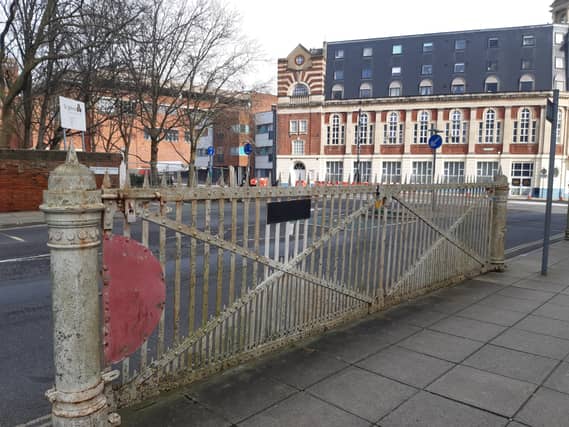

But it is its connection to the Royal Navy which has helped shape it over the centuries, with many of its historic gems having roots in the city’s strategic position in the Solent.
Portsmouth was founded in 1180 by Anglo-Norman merchant Jean de Gisors in the south-west area of Portsea Island, a location now known as Old Portsmouth was home to the first drydock ever built constructed by Henry VII in 1496.
King Henry VIII added important sites such as Southsea Castle, which is still standing today, and over the centuries other now historic and important buildings were added as our city’s rich history grew.
However much of our city was changed and history was sadly lost in the 1940s.
This is because during the Second World War, the city was bombed extensively by the Luftwaffe in 67 air raids between July 1940 and May 1944. This destroyed 6,625 houses and severely damaged 6,549, leading to a huge rebuild which - at first - took place off Portsea Island before the main island city itself was revamped.
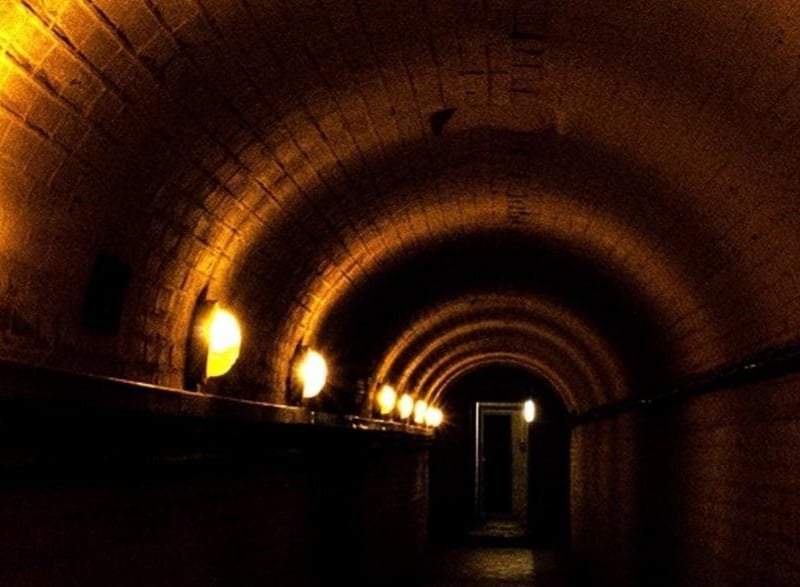
9. The forts on Portsdown Hill
Forts Widley, Nelson, Southwick and Purbrook all sit on the top of Portsdown Hill overlooking the city. They were built as a result of the 1859 Royal Commission, as part of a series of fortifications built to defend Portsmouth and its dockyard from a possible attack from inland. The main threat was perceived to be from Napoleon III of France, but this receded soon after the forts' completion. Due to this they became known as "Palmerston's Folly" but, though never needed for their original purpose, were useful anti-aircraft gun emplacements during World War II and it is possible to arrange visits to see the tunnels which still exist. Today Forts Purbrook and Widley are used as an activity centre, Fort Nelson is a free museum and Fort Southwick is used for business as well as QA's park and ride for staff. Nearby Fort Fareham, built at the same time, is now a small industrial estate and Fort Wallington has been largely demolished to make way for an industrial estate. Photo: Tony Ferguson
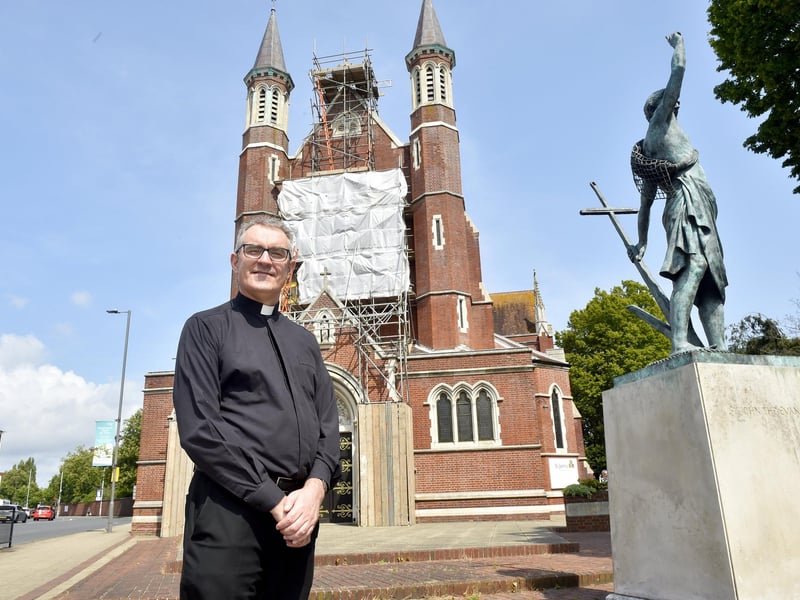
10. St John's Roman Catholic Cathedral
St John's Roman Catholic Cathedral in Bishop Crispian Way, Portsmouth is in the heart of the city built in a Gothic Revival style in 1882. However it was one of many of the city's locations to be forever changed by the second world war. The Bishop's House next door to the cathedral was destroyed on January 10 1941 by a high explosive bomb. While the main structure of the cathedral itself was mostly unharmed, all the stained glass except for the rose window in the south transept was damaged or destroyed. The Bishop's House was rebuilt, and other damage to the cathedral itself was gradually repaired in the years following the war, with work being finally completed in the early 1960s. Picture: Sarah Standing (140723-6566) Photo: Sarah Standing
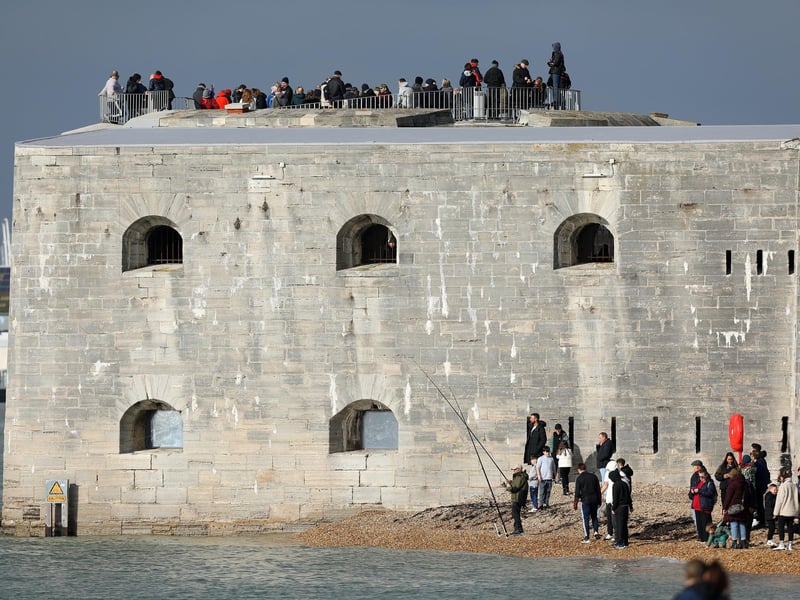
11. The Round Tower and The Square Tower
Old Portsmouth is one of the city's most scenic areas, and is home to both the Round Tower and the Square Tower which are linked by a small beach area known locally as the Hot Walls. The Square Tower was built in 1494 as part of the city's fortifications and served as a home to the Governor of Portsmouth before it was converted to a gunstore. These days it is a venue for events including weddings. The Round Tower (pictured)started life as a wooden tower built between 1418 and 1426 on the orders of King Henry V, then in the 1490s the tower was rebuilt in stone. Between 1847 and 1850 the roof of the tower was modified to serve as a gun platform. These days it is used as the perfect viewing platform for people to overlook the harbour and watch the ships come and go. Picture: Chris Moorhouse Photo: Chris Moorhouse
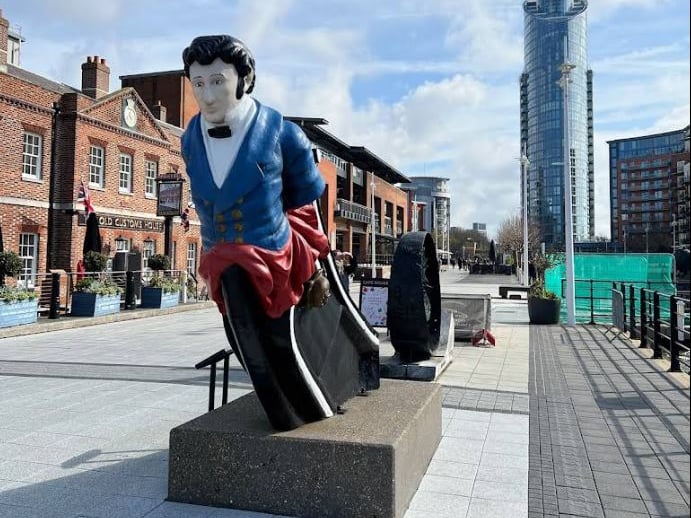
12. The HMS Vernon figurehead at Gunwharf Quays is one of just a few reminders of the history of the former naval site which was transformed into the popular leisure destination. The Torpedo School moved to the site after the First World War where it continued to operate until 1 April 1996, when the various elements comprising the establishment were split up and moved to different commands including the diving school. A number of the base's historic buildings were converted and the figurehead of the original HMS Vernon has been preserved as a nod to its history.
HMS Vernon figurehead at Gunwharf Quays | Google Photo: Google