
Flexible drone boats harkens back to the ‘age of HMS Victory’ in swarm tactics alongside HMS Prince of Wales

Deputy Commander Surface Flotilla Captain Adam Ballard believes the new hybrid navy will be a modern version of the fleet of the past
Versatile drone boats and autonomous vessels will support the Royal Navy aircraft carriers like smaller ships did with HMS Victory.
Captain Adam Ballard, Deputy Commander Surface Flotilla, believes the flexibility of un-crewed systems can better protect larger platforms and “keep the enemy at bay”. Rattler boats and Kraken K3 Scout vessels are already mobilised at HMNB Portsmouth, as the 1st Autonomous Squadron was commissioned at the base on November 5.
Capt Ballard believes the idea of using smaller vessels alongside larger command platforms, such as HMS Prince of Wales and HMS Queen Elizabeth, is nothing new. He said the ”age of HMS Victory” 200 years ago shows it can be done.
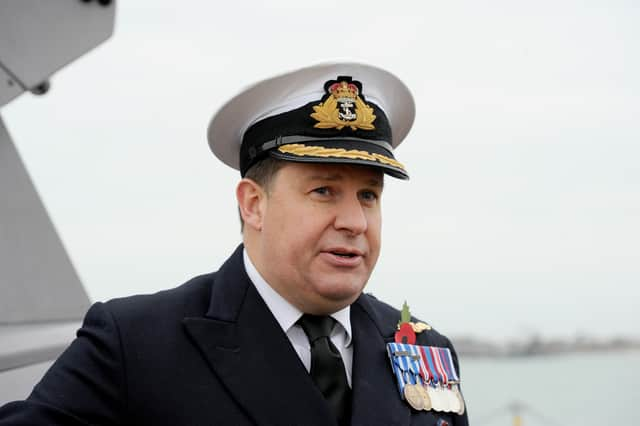

He told reporters: “We had very few high-value 100-plus gun ships, like aircraft carriers. Most of the fleet were 74-gunners, the equivalent of destroyers or similar vessels. Then we had the eyes and the ears of the fleet, the sloops and the frigates which went out and scouted out for the navy.
“What we’ve done is added back in the frigates and sloops of the Royal Navy, to be that eyes and ears of that task group, pushing those sensor ranges out and being able to fight that enemy at range. The hybrid navy is the direction of travel.”
The Royal Navy is pushing towards a hybrid force of conventional warships fighting alongside crewless platforms and drones. Plans have been set out for the aircraft carriers to form a ‘hybrid carrier air wing. The UK Carrier Strike Group (UKCSG) will have autonomous capabilities at its disposal.
HMS Prince of Wales is currently completing the second phase of Operation Firecrest, exercising with Nato allies in the North Atlantic and High North. She has played host this week to the International Sea Power Conference, where the Northern Navies Initiative was launched to better prepare navies for incursions by Russia.
When asked how autonomous ships and un-crewed vessels will generally be used alongside the aircraft carriers, Capt Ballard said: “That’s a great question. I treat all of this with humility and say I can’t give you a definitive answer, and anyone who said they can is lying quite frankly.
“This is about operational evaluation and experimentation, and developing as you’re delivering real world operations. It’s fairly obvious though that when you drive an aircraft carrier and a task group through a choke point in narrow waters, there is going to be a threat.
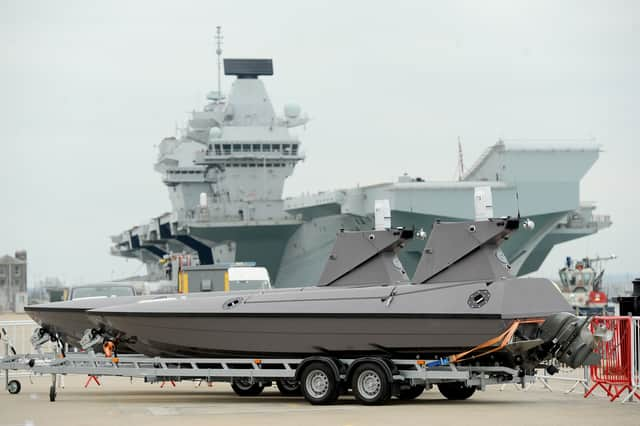
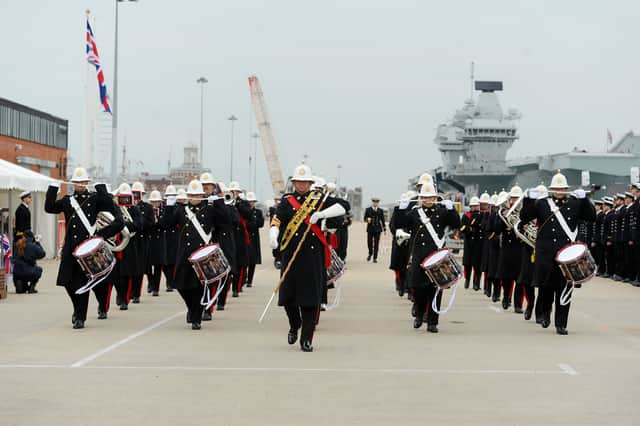
“There has always been a threat to large ships going through a narrow body of water, such as the Bab al-Mandab Strait. If you start to put craft like this with your task group, you are pushing your eyes and ears out, and pushing your effectors further away. You’re keeping the enemy at bay.”
Capt Ballard said the carriers will still act as the command platform, while un-crewed vessels will be deployed quickly to respond to threats. They have the capacity to be used within their own task group as part of swarming tactics, he added.
“You can start spreading yourself further around the world,” Capt Ballard said. “You start to increase the combat mass and lethality of the Royal Navy. You’re starting to do it at a price point that technology now allows.
“We can deliver combat mass in a really different way which is really powerful. I’m not saying you don’t need frigates and destroyers. You can’t just have crewed and uncrewed, you need both.”